Seven Wonders by Ben Mezrich

Seven WondersSeven Wonders by Ben Mezrich
My rating: 1 of 5 stars

Seven Wonders reads like a Monty Python sendup of Raiders of the Lost Ark. I would have laughed out loud as I read if it hadn’t apparently been trying to be a thriller instead of a farce.

The hero of the story, Jack Grady, is impossibly brave and lucky, surviving every cliched hazard from the Lost Ark movies: masses of spiders, snakes, collapsing walls, attacks by deadly Amazonian warriors, poison darts and spears. He can climb anything, swim through claustrophobically small tunnels in total darkness holding his breath for impossible distances. The attractive female biologist who decides to join him manages to keep up.

The book is full of grammar and logic errors. The publishers didn’t spend much on editors for this one. For example, at one point something moves so slowly that its movement can be measured only “in nanoseconds.” Hey, guys, if it’s moving slowly, you would measure it in weeks, years, or centuries. You would measure the distance it traveled in nanometers, perhaps. At another point the evil billionaire (more cliches) is observing a calf. The next paragraph it is described as a lamb. Then the next paragraph it is a calf again. Get your eyeballs in shape before reading this one. You’ll be rolling them a lot.

I usually don’t give reviews this low because when a book is this bad I normally stop reading early and move on, but I was having enough fun looking for the stupid errors and hackneyed writing, thinking about how I was going to review it that I managed to finish it. You’ve been warned. Read it at your own peril.

View all my reviews

Amazon’s new policy

Writers who publish their digital books on Amazon’s platform have long had to make a choice on whether or not to enroll in Kindle Select. If the author chooses to enroll, the book becomes available for borrowing by Kindle customers who are enrolled in Kindle Unlimited (KU) or Kindle Prime, which accesses the Kindle Online Lending Library (KOLL). KU customers paid about $10 a month for unlimited borrowing. Amazon Prime members pay less and are limited to one borrow per month, plus other benefits like free shipping on other items. It’s a very similar arrangement to Netflix DVD rentals with its different levels. Up until now, authors whose books were enrolled were paid on a per borrow basis. The concept is simple enough. Amazon would add up all the money garnered from the KU and Prime customers, maybe add some extra money to sweeten the pot, take out their cost plus profit share and split up the remaining pool among all authors based on how many borrows of their books occurred. It is much like pari-mutuel betting. An author would not make as much money from a borrow as from a sale, but he or she may get more readers by making book(s) available on a lending basis. Whether or not to enroll was a strategic decision; some authors chose to use Kindle Select, while others did not.

As Kindle authors now know, the formula recently changed. This has caused great consternation and discussion among authors, especially self-published ones. Everything remains the same except for the method of dividing the final pool of money. Now it is divided on a per page read basis. Yes, that’s right, on the number of pages the borrowers actually read, not just downloaded. Kindle readers and apps have a way of determining whether the borrowers have actually read (or at least paged through) a book, and communicating that back to Amazon HQ.

There are many issues raised by this change. First off, what is a “page” in a Kindle book? Amazon has created something called a Kindle Edition Normalized Page Count or KENPC. I don’t know the details of the algorithm, but for authors of purely text-based books, like me, the formula seems generous. My books’ KENPC have all turned out to be more than twice what the print edition page count is. I upload my books as a Microsoft Word document and the size of a KENPC page is probably based pretty strictly on the number of words. Authors with heavily graphic books, like art books, children’s books, graphic novels, etc., on the other hand, typically upload their books as pdf format. They have found that one print page equals one KENPC page. Other authors whose print books use small page size or a larger font or wider margins than my books have their normalized page counts somewhere in between. So under the old formula, a children’s book author with a 20-page (print) book containing graphics on every page who had one borrow would make exactly what I make from one borrow of my 423-page novel Cached Out. That novel now has a KENPC of over 800 pages, so assuming all the pages are read of both books, now I would get 40 times as much for a single borrow. Then again, the child may download and read 40 such picture books a month, while my novel may take a month to read. Fair or unfair? That depends on your view of the work involved in writing the two books, the value to the reader (e.g. hours of entertainment), the profit to Amazon, etc. Someone who spent three years traveling the world to produce a book of spectacular photographs isn’t going to look at it the same way I do.

What about those who download but don’t read? Remember, these books are free to the KU and Prime members. KU members especially can just download everything. I know for a fact that some people are “hoarders” whose only goal is to download as many as they can. They typically have tens of thousands of unread books in their collections. Even normal people might download a book, read the first five pages, and if it didn’t catch their interest, move on to the next one. Others might accidentally borrow one book thinking it’s something else, return it unread when they realize it, and download the one they actually wanted. Amazon had a policy to deal with all those people in the past. A book had to be read at least ten pages before it was counted as a borrow. Now, however, a page read is a page read. If someone opens up the book to verify it downloaded okay, but sees nothing beyond the title page, that is still one page read for an author. It also means that a book that holds the readers’ interest all the way to the end gets more compensation than one that readers don’t finish. This strikes me as fundamentally fair.

This new formula took effect July 1. The royalties for July won’t be paid until the end of August, so we really don’t know how this will play out until then. I suspect there will be a number of authors who leave the Select program. Amazon has a neat tool that shows an author on a day-by-day basis how many pages have been read. The first week I had a low of 1 page one day and a high of 709 pages on another. In fact, it updates hour by hour. There is a certain Pavlovian addictive quality to that tool. I find myself checking it several times a day and it is gratifying to see more pages have been read each time. Still, in terms of royalties, it is probably not going to make much difference. Borrowing has always been the smaller slice of the pie and will probably remain so. I’m pretty sure after the first couple of months, I won’t pay it any attention at all.

So will we find authors gaming the system? Will there be entrepreneurs who form KU downloading companies that for a fee will have its legion of employees download your books and page through every one? Time will tell. In the meantime, do me a favor will you? If you’re a KU member, please download all of my books and page through them to the end.

The Family Feud Effect (FFE)

I generally avoid opinion pieces in this blog, but I feel compelled to at least mention a phenomenon I’ve noticed for quite some time. Since 1976, in fact, when the TV show Family Feud debuted. I’m quite sure the general idea has existed for much longer, but it was with that show that I fully realized what was happening. In short, all public enterprise is dumbing down. This is most noticeable in forms of entertainment, but it exists in all forms of commerce and even government and educational institutions.

Why do I call it the Family Feud Effect? Because that show perfected the concept in a way that was sheer genius. Before that time, quiz shows were popular, but appealed mostly to people who were good at quizzes, i.e. smart people. Shows like The $64,000 Question, Concentration, Jeopardy, Wheel of Fortune all required considerable intelligence or a good memory, or both. The A students had an advantage over C students as contestants. Many viewers liked to compete with them in their own living rooms, and I’m pretty sure the demographic of fans was generally of higher IQ than the overall TV-watching public. Of course there were exceptions: The Price is Right, for example. I doubt being an A student had much advantage there. It appealed mainly to the acquisitive, although the prizes were a big appeal for everyone on all quiz shows, I’m sure.

But the creators of Family Feud found a way to make it a disadvantage to have a high IQ. In case you’re not familiar with how the show works, it’s quite simple. The producers first quiz the audience members about categories that have multiple valid answers, such as “Things that are delicious” or “Brad Pitt Movies”. The most popular answers are tabulated and stored. The contestants, with no prior knowledge of those questions, are then given those same categories on the air. They earn points by matching the answers previously given by the audience. The more popular the answer was with the audience, the more points that are awarded. Thus the people with the biggest advantage are those that are the most average. A low IQ is not an advantage either.

This was driven home to me when one of the categories was “People named Alfred.” I think Schweitzer and Neuman were among the top answers given by the audience. But I was stunned to discover that one of the top answers was Einstein. As I’m sure you, my intelligent reader, know, Einstein’s first name was Albert, not Alfred. That is why you would have done poorly on that question. Another example is when the moon was one of the answers for “Planets.” These wrong answers simply wouldn’t occur to the intelligent, well-educated individual. This is what I mean by the FFE.

The reason this is so important is that in a wealthy society like ours, money is to be made and power is to be held by appealing to the most people, especially those who are most easily influenced. Advertisers want eyeballs. Politicians want voters. That pesky bell curve tells us that means go for the person of average intelligence or even a little below. When TV was relatively new and relatively expensive, the demographic was also relatively intelligent and well-educated. It made sense to create programming that appealed to that demographic. But when TV’s became present in 99% of American households, that ceased to be true. The same phenomenon occurred with books and newspapers years earlier, and is happening with the computer and smart phone now, among other forms of media. As an author and book reviewer I notice it  with sadness in best sellers of today. There’s probably nothing to be done about it, but if you see the acronym FFE in any future blog posts of mine, at least you know what I’m talking about.

Cibola Burn by James A. Corey

Cibola Burn (Expanse, #4)Cibola Burn by James S.A. Corey
My rating: 5 of 5 stars

Cibola Burn is the fourth book in The Expanse, a science fiction saga that will be made into a television series on the SyFy channel starting December 2015. Set in the distant future, it features a universe where the solar system is still racially divided, but the races are no longer black, white, Asian, or Hispanic. They’re Earthers, Martians, and Belters, those inhabitants of the asteroid belt. I read and greatly enjoyed the first book in this series, Leviathan Wakes. There the archenemy of the entire solar system is a mysterious protomolecule (whatever that is). Here, in book four, humans have overcome the attack by the protomolecule and used the knowledge gained from that alien race to migrate through a gateway to distant planets, or at least one distant earth-like planet, New Terra.

The United Nations, the governing body of the solar system, has granted exploration rights to this new planet to a company called RCE. The problem for them is that Belters have already migrated there and set up a colony. They’ve also renamed the planet Ilus. When the first RCE ship arrives, it is met with a violent explosion. RCE sees the inhabitants as squatters and terrorists, while those inhabitants see themselves as pioneering settlers and rightful owners. I’d give you a little lesson on the principle of adverse possession here, but you aren’t interested.

The ensuing conflict between the settlers and RCE results in the UN sending James Holden and his intrepid crew of the Rocinante to mediate. It helped a lot to have read Leviathan Wakes. I pretty much remembered the characters. Of course our heroic leader and his crew are larger than life. Amos is the massive mechanic and all-around invincible lethal protector of the entire Roci crew, especially Holden. Alex is the best pilot in the universe. Belter Naomi, Holden’s main squeeze, is the best engineer in the universe. James Holden, of course, is the charismatic, brilliant, and hunky infallible leader.

The RCE expedition leader is killed early on and his place is taken by the security head Murtry, who is evil incarnate. Okay, so the characters are rather like comic book superheroes and villains without the superpowers. Batman, maybe. Still, the character development is surprisingly dominant in this space opera, especially among the peripheral characters such as certain settlers and RCE people. Action is kept to a reasonable level, enough to sustain the adrenaline flow, without deteriorating into an endless battle scene. The good guys are trying to keep peace, not fight, and everyone is fighting to stay alive on a planet that seems to be hostile to them all. The dialog is often witty or at least lighthearted. Expect a lot of sentences without the subject spoken. I’ve wondered why the entire Roci crew talks that way. “Pretty sure that’s not gonna happen.” “Not a problem.” “Couldn’t imagine why.” Got the drift?

The final action scene is about as hokey as it gets. I think it must have been written more as a storyboard for some awesome CGI special effects scene than as a denouement of the drama. Such attributes as scientific plausibility and logical consistency go by the wayside, but you rather expect that.

For a 581-page book, it’s a surprisingly fast read. In the end it kept me eager to get to the next chapter throughout, and that’s the best I can expect from any book. You should really start from the beginning of the series or wait for the SyFy series, although I am not optimistic about the treatment it will get there.

View all my reviews

The Anagram Times

I’m famous! … sort of. My earlier anagram of the GOP presidential field is now on the cover of The Anagram Times.

The GOP Presidential Candidates

In case you’re anagram impaired, the letters in the left column can be rearranged into the right column.

Jeb Bush

Ben Carson

Ted Cruz

Carly Fiorina

Lindsey Graham

Mike Huckabee

George Pataki

Rand PauL

Rick Perry

Marco Rubio

Rick Santorum

Donald Trump

Bobby Jindal

Chris Christie

John Kasich

Scott Walker

= The Sr. Prince

Black Doc

Tea Partier

Girly Token

Mr. Zip

Lacks Sugar Daddy

Ho Hum NYCer

Wacko Man

Frail Babbler

Cuban Crush

Senator Prude

Hungrier Joke

India Ink

Car Jam Chubby

Ohio Job Crisis

Milktoaster

Gut Shot – Dedication and Acknowledgments

Yesterday I posted the first episode of Gut Shot on this blog. Although the Dedication and Acknowledgments page appears at the end of the book, I thought it appropriate to include it here before proceeding with the rest of the book.

You can now order paperback copies of Gut Shot direct from my Cliff Knowles Mysteries website at a lower price than anywhere else ($12 outside of California, $13.05 in California including sales tax). PayPal and credit cards accepted.

Dedication

This book is dedicated to the men and women of the Federal Bureau of Investigation. The FBI is the finest law enforcement organization in the world. I’m proud to have served as a Special Agent of the FBI for twenty-five years and will always cherish the opportunity I had to serve my country in that way. Agents put their lives on the line every day to protect the public. The support personnel work every bit as hard as the agents and do an incredible job for ridiculously small salaries. We all owe them a tremendous debt of gratitude.

When reading works of fiction involving the FBI, it is easy to forget the reality and assume a cynical or inaccurate attitude toward the agency. The same is true for police and other public safety professionals. This book is fiction. The characters are not real. Any resemblance or similarity to real people is coincidence. The views expressed herein are not those of the FBI. The story and characters are created solely for entertainment and do not reflect the more mundane reality of protecting the public day in and day out. Enjoy the story, but do not let it detract from your appreciation of the people who allow you to live a safe and comfortable life in this country.

Acknowledgments

            I want to thank all those who made this book possible. First and foremost among them are my FBI coworkers who have inadvertently provided inspiration for the stories I have to tell simply by living them. My cover artist Doug Heatherly of Lighthouse24.com has contributed enormously to all my books’ successes. My beta readers and proofreaders have made many corrections and excellent suggestions that have greatly improved the books. These generous souls include Glenn Stewart, Becky Allen, and my daughter Cori Atkinson. Any inaccuracies or mistakes are my responsibility alone. Taking my cue from Silicon Valley culture: “They aren’t bugs; they’re features.” This book will be serialized on my blog: blog.ackgame.com. For that idea I thank my son Lincoln Atkinson.

The GOP candidates anagrammed

All right, everyone, don’t get your undies in a bunch. This post does not reflect my political views. It’s just in fun. You know how I like wordplay. So I anagrammed the entire GOP presidential candidate field. Not each individual name, the whole thing as one big bunch of 167 letters. The column on the left contains exactly the same set of letters as the one on the right. Enjoy.

GOP


If some of these don’t make much sense, gimme a break – they sure have a lot of R’s and C’s in the GOP.

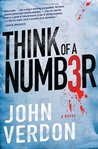
Think of a Numb3r by John Verdon

Think of a Number (Dave Gurney, #1)Think of a Number by John Verdon
My rating: 4 of 5 stars

This book begins with the main character, a retired homicide detective named Gurney, being contacted by an old college friend who received a mysterious letter asking him to think of a number less than 1000 and then to open the smaller envelope inside. He picks 658, and weirdly, the number in the small envelope is 658. The letter contains vague threats to reveal his deep dark secrets of the past. Great hook to start with.

I was all over the place in deciding where to rate this. The critics who call it trite are correct. The fans who say it is a page turner full of twists are right. In the end, I went with the fact that I raced through it to see what was coming next. That meant it was entertaining enough to hold my interest throughout, despite its flaws, and the point of the book is to entertain. Those flaws are enough to keep it from the 5-star category, but it has more positives than negatives and merits a strong 4.

On the plus side, the author has outstanding descriptive talent. Whatever he describes or characterizes comes to life: facial expressions, weather conditions, the decor of a room. You feel like you’re right there. He has a large and sophisticated vocabulary which he uses almost surreptitiously, without brandishing it like a weapon. Since he was an ad executive, that is perhaps to be expected. He writes dialogue better than most first-time writers, too. The pace is fast and there are plenty of twists. It was also well-edited, with no typos or grammar errors in a long book that I noticed. That’s rare. They even used née and né correctly. Call it a guilty pleasure, but I enjoyed it the whole way despite the problems.

The negatives are many. The characters are all totally hackneyed. The retired detective who neglected his family while becoming the best serial killer hunter in NYPD history. Every boss is a total condescending jerk. Virtually every male in the book is hostile, every remark accompanied by a smirk, a wicked grin, sarcasm, belligerence. Every woman involved in solving the murders is calm and intelligent, and, of course, attractive. The D.A. is a smarmy politician. The serial killer is maniacally brilliant. You get the picture. The plot steals from every thriller ever written: Sherlock Holmes, Psycho, etc.

Another problem is the lack of character development. Gurney is the only one developed at all, and he is such a cliché that you knew how that family life situation was going to resolve itself long before the end. All the others remain cardboard cutouts throughout.

I saw all the blurbs of high praise on the back cover and flyleaf and had an uneasy feeling. They were all from fellow authors. Not one from a critic. Those whores will trade effusion like pederasts trade porn. Okay, so I mentioned plot twists, which are praised no end by those authors. In my view good mysteries fall into two categories. First are those that have you fooled the whole time and when the big reveal comes at the end, you exclaim to yourself “Wow! I didn’t see that coming. That is so clever.” The other is the type that feeds you clues along the way at just the right pace so you solve it just before the detective does in the story. The self-congratulatory pride you feel is a major part of the fun, much like a clever crossword or acrostic puzzle. Like those, the key for the latter type is the Goldilocks rule: not too hard and not too easy. The mystery has to be just right. Here, it wasn’t.

This is going to sound like bragging, but I don’t mean it that way. I mean to point out a major weakness in the story. I figured out all the so-called mysteries and twists almost immediately. How did the sender of that letter know or guess the number 658? Not hard. Then later he predicts the number 19. I got that too. Who was the killer? As soon as the killer was introduced, I knew we had our man. The footprints in the snow that end nowhere? Yup, that one, too. Maybe I’ve just read too many mysteries, or my FBI background helped, but really, I think it’s just that the mysteries aren’t all that clever. Still, maybe it was just because I wanted to get to the end to be proven right in my conclusions, but I found myself pulled inexorably to the denouement and enjoying the ride.

View all my reviews

Spoonerisms * – a new crossword

The Reverend William Archibald Spooner is famous (infamous) for that particular flub we’ve all done where the initial sounds of two words are accidentally switched, like “Queer Old Dean” for “Dear Old Queen.” Perhaps the first I ever heard was attributed to the reverend, although I suspect that’s apochryphal. “Mardon, padam, but you’re occupewing the wrong pie. May I sew you to another sheet?” Real or made up, they can be amusing. Look for them in the puzzle below where you see the *. Click on the image to begin.

Cyberbully Blues by Rubin Johnson

Cyberbully BluesCyberbully Blues by Rubin Johnson
My rating: 3 of 5 stars

This sweet, engaging coming-of-age story follows Dakota “Kodi” Hamilton as she enters high school and through the next few years. The setting is 2037 in a world of housebots, commdots, and holos. She suffers many tribulations, including cyber bullying, physical injuries, unfair school discipline, an unrequited first crush, and a lecherous boss. She also has a fear of math and is as insecure as most freshman girls. She is raised by her mother with no knowledge of who her father is. She perseveres in her studies and overcome obstacles along the way.

At the beginning one gets the impression Kodi must have been raised in a closet. She seems unbelievably naive and ignorant about almost everything – boys, social media, and school activities among them. Even though she has had no experience with sports or computers, as soon as she is introduced to an activity, she almost immediately excels at it: running, soccer, computer coding, triathlons. She grows to love them all. Okay, so this unlikely story isn’t meant so much as a drama as an inspiration. The author is a compulsive teacher and coach who wants to explain everything, especially to young girls who are intimidated by sports, math, and computers. He demonstrates how to overcome fear and insecurity through Kodi’s triumphs.

I wouldn’t recommend this for most adults, but it can be a very inspiring book for girls in the 12 – 14 age range. I gauge it as a fun, quick read for someone in that demographic. It also pushed many of my favorite buttons by touching on hobbies I love, too, like geocaching, running, and multirotors (“drones”).

View all my reviews

Missing Witness by Gordon Campbell

Missing WitnessMissing Witness by Gordon Campbell
My rating: 5 of 5 stars

What a terrific legal thriller this is. The author is an attorney and writes convincingly of the legal process and strategies. Make no mistake – this is NOT a detective story. It’s all lawyers. If you’re after gunfights, car chases, and the like, don’t look here. But if you’re like me and enjoy the battle of wits in the courtroom (and outside sometimes, too) this is your sirloin steak.

The outcome of the trials is never really in doubt, but the road there is full of so many twists and turns your head will spin. The writing is learned and intelligent. Lawyers write so much better than writers, surprisingly, although usually they don’t tell stories that are as good. Here, the author does both well, but I will admit that I probably enjoyed it more than most people because I am, or at least used to be, a lawyer.

Despite my legal training I must say I’ve never bought the [insert epithet here] about truth and justice being found through the adversary system, or, for that matter, by a jury of one’s peers. My sympathies are entirely with those who ask criminal defense lawyers how they can look themselves in the mirror every morning. In a perfect world everyone in the justice system would be trying to bring out all facts and evidence relevant to a criminal trial, rather than hiding the ones that are harmful to their client. A lawyer with a guilty client should be helping society by working toward conviction and appropriate punishment rather than acquittal, but we all know that’s not how the system works. This is not a perfect world. It’s America. Lawyers, knowing what is in their own financial self-interest, work toward is in the best interest of their client, even if that means making him or her able to resume criminal activities sooner and with greater success. They’re like fences – associates who are part of the service industry making crime pay. Then they convince themselves it’s unethical to do anything else.

But I digress. The narrator in this case is an idealistic young trial lawyer sitting second chair in a spectacular murder trial, his first trial, under the tutelage of Dan Morgan, a legendary defense advocate. Morgan is one of those all-too-familiar antiheroes we see in novels – the hard-drinking, chain smoking, philandering play-by-his-own-set-of-rules kind of guy. Our neophyte gets some hard lessons in ethics, or the lack thereof.

I am curious about one thing, though: what in the heck does the cover art have to do with anything in the book? Nothing that I can see. Anyway, I don’t want to spoil anything, so I’ll leave it there. Have fun with this one.

View all my reviews

Different from, Different to

Lately I’ve been noticing more people say “different to” as in “The way I do it is different to the way other people do it.” Previously the only correct form I’d ever heard was “different from.” Fortunately there’s a handy-dandy tool now available to check to see if I’m just imagining it, or perhaps I was just to dense to notice it before. That tool is Google’s N-gram viewer. Here’s the link if you want to check for yourself: Different from vs. different to

I stand vindicated. The “from” form has always been the much preferred form and remains that way today, but I was not imagining the change. Use of “from” has declined in recent years while “to” has increased. In 1963 “different from” was approximately 55 times more frequent in writings, whereas in 2008 in is only 20 times more frequent. I have no explanation for why this is so, but I do have an opinion on which is correct. It seems to me that “from” is the only correct preposition to use there. The very fact of its vastly more frequent usage makes it the standard to go by and is reason enough in and of itself. In addition, the word “different” implies a separation, a moving away from something, not a joining or moving to something. “Different to” just doesn’t make sense. Call me prejudiced, but yet another reason is that the persons I’ve heard use the “to” form in speech have generally been people whose grammar and usage is sub-par. I consider it a form of logic, not prejudice, to infer that if the only people who say something a certain way are people who are poorly educated or unintelligent, then that form is not correct and should not be encouraged.

Silicon Valley housing prices vs. salaries

It’s ridiculous how much housing costs have gone up around where I live. It doesn’t affect me personally, at least not in the normal sense of my own housing costs, although it influences who is moving in around me, and all the nearby construction. If Zillow.com has the value of my house right, it is now worth over eleven times what I paid for it in 1981. Yes, eleven times! Now I think Zillow may be on the high side. My own estimate would put it at “only” ten times. That’s still outlandish.

How does anyone afford to live here? Well, tech salaries have skyrocketed, too, but not everyone is a tech worker. Even Google and Apple have janitors and cafeteria workers. I couldn’t find any statistics for average salaries for this county or region over that period of time, but the U.S. government figures for average wages nationwide show only a threefold increase in average wage between 1981 and today. So housing costs have gone up ten times while wages have gone up three times. That would mean housing, as a percentage of income, has more than tripled for the average worker around here. Even if we assume wages and salaries have gone up more in this area than the nationwide average, it’s probably still true that housing costs, relative to salary, have at least doubled. For renters, the rule of thumb of spending no more than 30% of your salary on rent would have to change to 60% or more around here.

I started to write about the change in the neighborhood, the traffic and other problems from the economic boom around here, and a bunch of personal blather, but then thought better of it. If you’re thinking of moving here because of a good job offer, perhaps you only need to know two statistics: The average new home purchase price in my city is now over two million dollars. You can probably find an older fixer-upper for $1.8 mil. If you plan to rent, the average monthly rent here for a three- or four-bedroom house is about $9,000. Of course, you can live in an apartment or condo in a cheaper city and fight the commute to your new job at Google or wherever. Good luck with that. I recently read that many tech workers are now choosing to live in trailer parks as the only viable housing option. That salary they’re offering you isn’t as high as you think it is. Do me a favor and just stay away.

Cliff Knowles #5 – GUT SHOT

Cliff Knowles fans, are you ready for number five? In this one Cliff tells the story in his own words. Here’s the best part for you: the novel will be serialized right here on this blog. Loyal fans of this blog will be able to read it for free. The date of release is not set yet, so keep watching.

If you have questions, feel free to ask them in the contact form below.

← Back

Thank you for your response. ✨

Bartleby, the Scrivener by Herman Melville

Bartleby, the ScrivenerBartleby, the Scrivener by Herman Melville
My rating: 4 of 5 stars

This short story was published in 1853. I grabbed this from the library shelf on a lark, recalling that I admired Melville’s style, but wasn’t interested in slogging through a tome the size of Moby Dick again. Since this story is a classic work which has been analyzed to death by academics and book bloggers alike, I will dispense with any discussion of the philosophy which may or may not be hidden within it. Nor will I be drawn into character analysis, such as whether Bartleby is an exemplar of irony, melancholy, humor, etc. I’m not even sure Melville intended to provide either a philosophical point or a character study. He may have simply been trying to write an engaging story that would help earn him his living.

What entertained me about the book is its charming style and intelligence. Melville writes with elegance and a mastery of the English language. No publisher today would permit the author of a work intended for the general reader, i.e. mass market, to use the vocabulary one finds in this story. Here’s a sampling: scrivener, imprimis, deign, dishabille, remonstrated, gainsay, maledictions, indecorous, deportment, chimeras, choleric, quietude, obtruded, unwonted, moulders, forbade, incubus, vouchsafed, pugilistic, inveteracy, purveyor, sanguine, beckoned, effrontery, prudential, orbicular, potations, recondite, hermitage, dyspeptic, tenanting, hectoring, upbraided, chancery, blazonry, alacrity. Sure, some of these are either archaic or oddly quaint, but the vast majority of these words are perfectly good words today that one might find in academic papers, legal opinions, or other writings by the highly educated and intelligent. My browser spell check feature only objects to one (blazonry). Yet you are unlikely to find many of these in a best selling novel of today. Sadly, the publisher would require the author to dumb it down. That is why I found it so refreshing to be communicated to by an author who treats me, the reader, as intelligent and well-read.

I consider this trend indicative of societal changes in general. Books have gone the way of televisions and computers. When they were relatively new, the main consumers were relatively educated and relatively wealthy compared to the population as a whole. Thus the content (stories, TV shows, computer programs) were aimed at that demographic to a larger extent than they are now. Of course there were exceptions (The Three Stooges, anyone?) Now, these things are accessible to virtually everyone in the developed world so producers of media content of all kinds are aiming for the biggest slice of the consumer market, which means the peak of that pesky bell-shaped curve. Another quality of this work evocative of an earlier time is its humaneness. It is taken for granted that no respectable human being would be unkind or disrespectful to another. Melville was aiming for the upper end of society, not so much in wealth or social standing, but in intelligence, education, and character. If you’re there, try this quirky story. I think you’ll enjoy it.

View all my reviews