Monthly Archives: October 2026

Getting Away With Millions by Shari Lapena

Getting Away with MurderGetting Away with Murder by Shari Lapena
My rating: 4 of 5 stars

Ted and Jill are rich from Ted’s inheritance and they’re living the great life, spending like the money will never end. But it does. Ted is foolish with money and they are about to go broke. Fortunately Ted is the only heir of Greg, his older brother, and Greg is filthy rich. He got all the brains. So of course they murder him, pushing him off his own sailboat. There is no evidence against them, so they’ve gotten away with murder, the perfect crime. Not so fast. There are a number of people who suspect them, including a Coast Guard Special Agent, Greg’s ex-wife, and Jill’s best friend. Then there’s the son of their cleaning lady, a ne’er-do-well hooked up- with some Russian toughs. Ted and Jill are very unlikable, of course, but the others involved show a devious and greedy side as well. Ted continues to bollix things up. Do they get caught and go to prison? Who gets the millions in the end? Hint: someone does. Like other reviewers, I’m not a fan of novels with unlikable main characters, but the plot is quite clever and plausible, so I was intrigued from the start. It’s worth picking a horse to root for and follow the story.

View all my reviews

Upheaval by Jared Diamond

Upheaval: Turning Points for Nations in Crisis (Civilizations Rise and Fall, #3)Upheaval: Turning Points for Nations in Crisis by Jared Diamond
My rating: 4 of 5 stars

The book is too dense and long to cover everything I liked, or didn’t, so I just mention that I particularly liked his treatment of Japan. I find his account to have nailed it. I did my college year abroad there and his description meets my memories 99%. I read the entire book except for most of the final chapter and Epilogue. I think he is/was hopelessly naive and arrogant to write advice to a nation on how we change change as a country in a book. Does he think any significant part of the nation will read or that any percent of those who do will change their world view because of it? Not a chance. Since he talks there about the possibility of nuclear war, I will weigh in on that. The fear is justified as such a war would be terrible, but I believe the aftermath has been misjudged, perhaps even exaggerated. We have many examples of places that have experienced a major nuclear explosion or contamination – Nagasaki, Hiroshima, the Bikini Islands, Chernobyl, Tohoku, Japan. I visited the nuclear parks in Hiroshima and Nagasaki right at the epicenters. They are teeming with life, mostly people, but birds and plants and animals, too. The same is true even of the Pacific islands where nuclear tests took place, although without people now. If it happens, the destruction will be localized and will pass and people will find ways to make at least most currently inhabited areas of the world livable.

View all my reviews

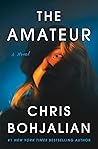
The Amateur by Chris Bohjalian

The AmateurThe Amateur by Chris Bohjalian
My rating: 4 of 5 stars

Mira is the narrator, a fifty-nine year-old novelist writing her memoir centered on a turning point in her life. As a teenager she was a golf phenom, destined for the LPGA pro tour. She was recruited by the Yale golf coach. Then, in a fluke accident, as she was driving balls into a practice net at the country club, she drives one through a hole in the net and it strikes a caddie in the temple and kills him. He was a boy she knew from school and liked, although not romantically. From there her life spirals down into drugs, booze, and sex with unsuitable men, although there was some of that even before. The lawyers smell money and the blame game ends up in the courts.

It takes a long time for the author to let the reader know what actually happened. Before that he paints a quite depressing picture of a young woman who grew up as a privileged brat turn into an even worse character over guilt, her PTSD, if you will. For this reason, it’s not really a fun read for a long time, if at all, and I think some of the less than stellar reviews reflect that. But I thought the ending largely redeemed the early 3/4 of the book. The courtroom scenes were excellent and there was a twist I didn’t foresee. The writing style is literate and enjoyable even when we are disliking the narrator. If you have patience, this can be an enjoyable book.

View all my reviews

SUNO likes and followers

I enjoy making music with the SUNO AI platform. I don’t monetize my music, or even upload it to any other site like YouTube or Spotify. I know that a lot of SUNO users do. So I’m not one of those who seeks more followers or more likes for their songs. I don’t follow many other people since I haven’t found many whose music I like; I know some people, even some who follow me, probably do that in order to get people to follow them. I don’t. Still, I have accumulated over 100 followers without trying. I’m glad people enjoy my music. I don’t put any restrictions on them. People can remix them, i.e. make their own songs from the ones I’ve published. Getting more followers and likes, I’ve found, is largely dependent on SUNO’s whims or algorithms. So I’ve learned a few things about that.

Getting likes and followers is largely dependent on how often and how widely your songs are displayed to others when they are logged on. SUNO distributes in several different ways. When you log on, your home page is shown, and on that page are three columns: For You, Following, and Because You Create [country, Jazz or whatever]. For You displays songs you supposedly like, i.e. to your taste. One problem with this is that it often displays your own music here for some reason. That makes no sense to me. Following shows the latest songs from people you follow. Key insight here: the emphasis is on recent. SUNO definitely gives more exposure to recently made songs, no doubt to keep creators engaged or even hooked. So if you want more exposure, keep making songs. The last column is self-explanatory, but is largely useless because SUNO classifies things in inaccurate ways and also because in my case I make a lot of different genres: folk, blues, classical, rock, ragtime, swing, barbershop, jazz, country, bluegrass, etc.

Another obvious way to get followers and likes is to create music people enjoy. Tastes vary, but you can get some idea of what stuff others like (if that’s important to you) by paying attention to the number of thumbs up “likes” on your songs. I’ve found that an average successful song will garner about 5% as many likes as it has plays. If your song gets 100 plays (that’s more than most) and you get five likes, that’s success. I’ve seen this with others, not just with my songs. I suspect the reason more people don’t click that like button is the same reason I don’t, even when I enjoy a song. When you click that icon, the song is automatically loaded into your Liked playlist, which I use as my default SUNO playlist. I have over 200 songs there and add more regularly. I use it like others stream Spotify, etc. So I only click it when I know I’ll want to be listening to it again and again. If I like it mildly, but not enough to put in my playlist, I can go to the comments options and give it a thumbs up there, or make a favorable comment or icon. That shows approval without committing me to it. One warning: that 5% figure is not meaningful until you get up to at least a couple dozen. I rarely publish a song that I don’t like enough to put in my Liked playlist, so the first Like is mine. So after ten plays, if there’s one like, that really isn’t 10%, it’s 0% of everyone but me. But I’ve seen profiles of creators who have over 1000 songs, 1000 followers, and their most liked songs have only 2 likes in 1000 plays. So don’t just spew out scads of sloppy songs to get numbers. Content is more important.

I’ve found that a surprising number of SUNO users are devout Christians and they span genres. For many, it is their way to celebrate or demonstrate their devotion. My gospel recordings tend to do better than blues, folk, etc. Even though gospel/spirituals, etc. are less than 10% of my songs, my top two songs are actual gospel and #3 is Southern gospel style country. They adhere pretty closely to the 5% rule, but they get many more plays. The number of plays/likes for the five most liked songs are: 871/44, 767/33, 558/28, 71/9, 91/7. Another thing that matters is the graphic you create. Good videos get played in the “Hooks” section of the Search page and often attract followers or likes. But videos cost a lot of points and limit what you have for creating songs, so I use that sparingly and just don’t care that much about attracting people. I’ve found I get better quality still images from other AI sites like Gemini or Copilot than I do with SUNO, and those don’t cost any points so I usually upload one I’ve created there. I haven’t found that it makes much difference whether a song is a vocal or an instrumental. Four of my top 10 songs are instrumentals.

Engaging with others also often results in someone following me. I try to comment on others’ songs, as I mentioned before, instead of clicking Like. I’ve found people usually respond favorably with a grateful reply, even when they don’t follow me or Like any of my songs, and that’s nice, IMO. I’d rather have a nice comment on a song of mine than another follower or Like. Obviously, there’s a lot more that could be said about this, but this post is long enough already. If you want to hear/explore my music, here’s the link: https://suno.com/@ratkin.

Dead Money by Jakob Kerr

Dead MoneyDead Money by Jakob Kerr
My rating: 4 of 5 stars

Mackenzie is a woman lawyer at a venture capital firm. Jameson Danner is an FBI agent in the San Francisco office. When the CEO of a high-tech company that Mackenzie’s firm invests in is murdered, these two end up investigating as a team. Or are they really on the same side? The case appears to be a standard whodunit at first, but spirals into the arcane backstabbing, dog-eat-dog world of Silicon Valley and VC firms. Four stars may be a bit of a stretch, but I enjoyed it enough, subject to my usual reservations below.

As an FBI agent in the San Francisco office for decades and an attorney who worked at high-tech firms (like Mackenzie and the author) and an author of crime novels like Kerr, I am both amused and at times dismayed at how much writers of TV, movies, and books get wrong about the FBI. Of course much of it is intentional since the truth is too mundane. At least Kerr more or less solved the problem of lack of FBI jurisdiction, although with a preposterous angle. A few peccadilloes I feel compelled to point out: an FBI agent would never take a civilian to some of the dangerous situations in the book; agents don’t rack or fiddle with their guns before making the entrance to a dangerous situation. The gun is always loaded, a round chambered and ready to fire. They don’t call each other by their titles, like Agent Jones. You don’t call your coworkers Manager Smith and Secretary Andrews, do you? One thing he did get right based upon my time as a manager in a couple of high-tech Silicon Valley firms is that the executives are out solely out for themselves and will gladly shaft fellow employees, investors, clients, the public, and stockholders if it’s to their advantage to do so. I’m so glad I went back to public service after the corporate jobs so I could feel good about my work.

View all my reviews