Category Archives: Uncategorized

Doomsday Book by Connie Willis

Doomsday Book (Oxford Time Travel, #1)Doomsday Book by Connie Willis
My rating: 2 of 5 stars

This is a time travel science fiction book where the main character, a young female historian, goes back to medieval times. The author’s main purpose in writing this book, so far as I could tell, was to show off her knowledge of that era. It was lush with detail, but unless you are into history you’re likely to be overwhelmed by the tedious display.

It was a strain to give this as much as two stars. Perhaps I was expecting too much because this was a Hugo and Nebula Award winner and Willis is supposedly an iconic figure in science fiction, but I must agree with all those who say it was boring. The almost six hundred pages could have been easily trimmed to two hundred. The author tries to keep the reader in suspense by constantly keeping the characters from contacting each other with the necessary information due to sickness, quarantine, travel with no phone, etc. It was simply irritating. The plot really doesn’t hold together and most of the characters aren’t very likeable. The whole bell-ringing thing was another irritant. Maybe Outlander fans would enjoy it, but I can’t recommend it.

View all my reviews

Apple Tree Yard by Louise Doughty

Apple Tree YardApple Tree Yard by Louise Doughty
My rating: 4 of 5 stars

The opening tease of a scene was the only clue for the first half of the book that this was going to be anything other than a romance, a modern day bodice-ripper. There is no doubt that the affair is described with skill and mostly good taste. The author has a real talent for eroticism. I could see a few eyeglasses getting pretty well steamed from some of the scenes.

The book is told in the first person by a geneticist, a woman Ph.D. with a prestigious position at a British research institute. She is speaking as though to her lover, who we know from the opening scene is “in the dock” as her co-defendant, although we don’t know exactly what for. The suspense is palpable until the author brings us to the events that lead to the trial, rather a long way in, at which point things becomes rather predictable.

At times the monologue was out of character, and this bothered me a bit. I listened to it on CD, read by an excellent actress who used a very high-class, educated accent for the protagonist, so it was jarring when the romantic language was punctuated with an F-bomb. The crudeness was kept to a minimum, but it still took me out of the story and detracted from the empathy we are to feel for the main character, who is portrayed as a victim.

At times, too, her grammar was not consistent with her level of education. At one point she says to her lover, “Us means you and I”. No, “we” means you and I. “Us” means you and me. She repeats this mistake in reverse later, saying “to you and I.” Don’t they teach the difference between the subjective and objective cases in England? A brilliant Ph.D. speaking this poorly is not credible.

The trial scenes examining witnesses were excellent. As an attorney, I appreciated the skill with which this was done, although I doubt an American judge would allow the attorneys the latitude given the ones in the book.

In Goodreads, I gave it three stars, because I liked it, but for Amazon and this blog I’m raising that to four, since the grading scale is different. I can’t quite go to “really liked it” but it’s worth a read.

View all my reviews

Movie Analysis part V

Genres

Continuing my analysis of movie trends, I prepared this chart showing the relative frequency and popularity of the different genres of movies. Click on the chart to enlarge it if you have trouble reading it. The purple bars show how many of that genre were in the data. The green show the average number of viewer ratings for movies in that genre. I normalized Titanic and LOTR:The Return of the King for reasons explained in earlier posts. I found the results surprising. Science Fiction/Fantasy is obviously the big box office winner.

Four hundred movies were included in the data, consisting primarily of those listed in RottenTomatoes.com (RT) each week as most popular in theaters and most popular DVDs and downloads over the last several months, but also included all the movies I have viewed from Netflix that I could retrieve from my viewing history and movies from lists of Oscars winners and nominees over the last ten years. I believe that the data is fairly representative of movies being made in recent years.

Assigning a genre to each movie is somewhat subjective, but perhaps less so than I thought it would be. Some movies were assigned more than one genre, but I tried to avoid that and pick just the one that was primary. If I didn’t know the genre I relied on RT’s description and genre designation. Here’s a brief description of how I defined each genre for purposes of this chart.

Drama: This is the default for fictional movies. Almost all movies have dramatic elements but I only assigned this to movies where the story line was the primary draw and it did not clearly fit the other genres. It includes most mysteries, thrillers, coming of age stories, etc. Example: The Descendants.
Animated: Movies that were entirely animated, including stop motion, but not including mix of animation and live action. Example: Fantastic Mr. Fox.
Comedy:  Includes dark comedies and farces. Example: Kenny.
Foreign: This is more of an attribute than a genre, so foreign films were usually given a separate genre such as drama, comedy, etc. Example: The Broken Circle Breakdown (which is also a musical).
Reality: Fictionalized movies purportedly based closely on real events or persons, such as biopics. Example: Lincoln.
Documentary:  Example: Code Black.
Musical: Some musicals were also reality-based, dramas, or other genres. Example: Annie.
Horror:  Example: Ouija.
Sci-fi/Fantasy:  I consider science fiction (e.g. Gravity) and fantasy (e.g. Harry Potter) different, but there is a large overlap (e.g. Interstellar) and most movie sites treat them as one genre.
Romance: There are romantic elements in most movies, but I restricted this to essentially pure love stories. Example: Amour.
Action: Movies where the main draw is explosions, car chases, fights, stunts, etc., not the story. Example: Hercules.
Kids: Movies aimed to attract children, including teens, or the whole family. There is considerable overlap with animated movies, but not all animated movies are kids’ movies and vice versa, so I gave them separate genres. Example: Frozen.

Dead as a Doorbell

I don’t know when it happened, but doorbells died. So did knockers. There’s a dirty joke there somewhere, but that’s not where I’m going. What I learned recently is that people don’t use doorbells any more, nor do they use door knockers. They call. At least, that’s what they do when they arrive in response to a craigslist ad. Maybe craigslist is the killer.

After my remodel I had several items to dispose of, so I ran a few craigslist ads. Without exception everyone who came to see the advertised items called me when they arrived in front of my house. This is true even though they were expecting to come inside. So I had to go outside and escort them in. Two of them didn’t even get out of the car until they saw me come out the front door. Why didn’t they just come to the front door and knock or ring? There must be some generational thing going on. Maybe it has to do with smart phones, but I don’t see why that would make a difference. I found this behavior rude, although I’m guessing these people thought they were being polite somehow. Perhaps where these people live, for security reasons no one comes to the door unless they know who it is, so calling is necessary.

Of course, this can only happen if the visitor has my phone number. We still get doorbell ringers soliciting donations, trying to get our house listed with them, or even selling girl scout cookies. When we invite personal friends over, they come to the front door and ring. So my observation only applies to “casual visitors” for want of a better word.

If you are among those who call instead of knocking, I’d like to hear from you. What is your reasoning? I’m attaching a contact form so I can get some responses.

← Back

Thank you for your response. ✨

No means yes

Reposting from The New Yorker:

What Part of “No, Totally” Don’t You Understand?
By Kathryn Schulz

Not long ago, I walked into a friend’s kitchen and found her opening one of those evil, impossible-to-breach plastic blister packages with a can opener. This worked, and struck me as brilliant, but I mention it only to illustrate a characteristic that I admire in our species: given almost any entity, we will find a way to use it for something other than its intended purpose. We commandeer cafeteria trays to go sledding, “The Power Broker” to prop open the door, the Internet to look at kittens. We do this with words as well—time was, spam was just Spam—but, lately, we have gone in for a particularly dramatic appropriation. In certain situations, it seems, we have started using “no” to mean “yes.”

Continue reading here: http://www.newyorker.com/books/page-turner/what-part-of-no-totally-dont-you-understand

Ellen Pao Verdict

Those who follow high-tech or financial news, and many others in the San Francisco Bay Area are aware that Ellen Pao, now the CEO of Reddit, sued her former employer, the venture capital firm Kleiner Perkins for sexual discrimination and retaliation. Contrary to popular misconceptions, she did not sue for sexual harassment. She alleged that she was not promoted due to her sex (remember, the correct word is sex, not gender – see my very first blog post, People Have Sex), and that she was retaliated against (fired) for complaining that she was discriminated against.

I try to avoid controversial or political topics, but this is an area about which I have considerable experience and expertise. By way of background and full disclosure, I was for several years a labor and employment lawyer. I litigated three different cases that are somewhat related to this case. Two were labor arbitrations where a male employee was alleged by a female employee to have sexually harassed her. The employer (my client) fired the male employees in both cases. One was a manager; the other was not. In those two cases the male employees exercised their right to arbitration and fought the discipline. In both cases I won the case, i.e. the terminations were upheld. So in those two cases I was on the side of the woman, proving that she was indeed harassed. In the case of the manager, the harassed woman, after the employer’s victory proving that it acted properly in quickly investigating the allegation and terminating the offending employee, then sued her employer for the same harassment. California law in this regard is crazy, in my opinion, because the employer is strictly liable if the offending person is a manager. Even though it was proven that the man was given regular and approved training in what is acceptable and appropriate conduct and what is prohibited sexual harassment or discrimination, and the company properly investigated the incident and terminated the offending employee, it is liable for actual damages to the victim (but no punitive damages).  The other case was a federal lawsuit from a black female who alleged that she did not receive a promotion due to her race. Since most of the other employees in the higher position were female, she could not credibly allege sex discrimination. I won the case on summary judgment in federal court. She appealed all the way to the Supreme Court (which refused to hear the case) losing at every step. She also claimed that, like Ellen Pao’s case, she was fired for complaining, but in fact she resigned, claiming she was was “forced” to resign because she could not work in that racist environment.

I have a further connection with the Pao case in that I know (slightly) the lead attorney for Kleiner Perkins, Lynne Hermle. She represented a company against a fired male employee’s lawsuit. It turned out that the employee was stealing the trade secrets of his former employer and I investigated that case as a trade secret theft when I was in the FBI. Hermle was gathering information in her civil suit while I was doing my investigation on the criminal side. The case ended up being the inspiration for Fatal Dose, one of my Cliff Knowles Mysteries. The employee lost his civil suit and was convicted of trade secret theft.

I was not surprised when Pao lost. I am aware that many women in high-tech are surprised and upset by the verdict, but they shouldn’t be. First of all, the trial brought out some sexual shenanigans, shall we call them, which many people, both men and women, found shocking or offensive. I will be the first to say that I do not put much stock in news reporting of such cases because my own experience with cases in which I was involved and know the facts is that reporting is often inaccurate or at least sensationalized. But based on that reporting, which was pretty consistent in various news outlets, Pao was a willing participant in much or all of it. Depending on one’s bias, it could look a lot like a calculated choice of sleeping her way to the top or older male bosses taking advantage of a young woman subordinate. In my personal experience, there are plenty of cases I know where the woman employee initiated or enthusiastically participated in the sexual relationship with a superior or coworker and in a few cases later used a threat of a sexual harassment lawsuit when she didn’t get her way or the relationship ended. I also know of cases where there was no sexual conduct at all but the woman alleged that there was. So if you are one of those who thinks the female is always the victim if there is any kind of inappropriate sexual conduct, you are simply wrong. Yes, women who allege such harassment are usually telling the truth and there is plenty of harassment by men of women that goes unreported. Some men are pigs and abuse their positions of power. It is also true that some women are attracted to men in positions of power or wealth. Women and men both like sex; the history of human population growth have established that fact. So set aside whatever feelings about whatever sexual conduct occurred, be it harassment or not, that you heard about in this case. My guess is that there was no such allegation in Pao’s complaint simply because of Pao’s own willing participation in such conduct. It’s irrelevant to the verdict.

So what about the alleged discrimination in promotions? This is much harder to prove than sexual harassment. Pao in fact received promotions and made a ton of money at Kleiner Perkins. She’s making a ton of money at Reddit, too, I’m sure. Proving financial damages could prove difficult, but that’s a separate issue from whether she was discriminated against. Still, I can imagine she was not a sympathetic character since she is wealthy and privileged by any measure. Her husband’s legal troubles were kept out of evidence, but it’s impossible to know whether they somehow contributed to a negative view. In my experience, promotions are granted or denied on such a wide variety of grounds that it is very difficult to identify a single factor that led to the promotion or the denial of promotion. The higher you go on the corporate ladder, the stiffer the competition is, and fewer rungs; there can be many candidates who are well-qualified. The skill set that was needed at a lower level may be less relevant at a higher level. In the legal profession, in private practice, one’s ability to make partner, or senior partner, will almost certainly have more to do with how many and what kind of clients you can bring in or retain than it does with your legal knowledge. I suspect that’s true in venture capital, too. That often boils down to how likeable you are. Remember what it was like in high school elections? Were the smartest kids, the ones most knowledgeable about government elected to be class president or student body president? No. It was the most popular kids, the best-looking, the one other kids thought would be most likely to throw the best reunion party in ten years. It’s really much the same in business and in government. For that matter, whether the jury found her likeable or not probably had a lot to do with it.

The comments by jurors after the trial seemed to bolster this view. Several jurors have been quoted as saying she didn’t get the promotions because of her personality, not because of her sex or race. I am not saying she wasn’t discriminated against or that the verdict was right or wrong. I am only offering my take on why the verdict went the way it did. My life experience tells me that almost no one thinks he failed to get a job or a promotion because of his own shortcomings, personality, or life choices. It is almost always attributed to an unfair attitude or discrimination. So my advice is that if you want that high-level job, bring in money, be likeable, and drink or play golf with the boss. Preferably all three.

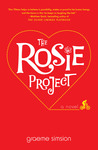
The Rosie Project by Graeme Simsion

The Rosie Project (Don Tillman #1)The Rosie Project by Graeme Simsion
My rating: 5 of 5 stars

I departed from my usual steady fare of detective stories to enjoy a delightful story of an autistic genetics professor who sets out to find a wife using a lengthy questionnaire of acceptable traits. Everything is either correct or incorrect. While working on his Wife Project, he gets sidetracked helping a young woman, the eponymous Rosie, in her quest to find out who her real father is. Rosie, of course, as a drinking, smoking, brilliantly-dyed redhead, is totally unsuitable as a mate. And if you can’t predict how this one ends, you’re somewhere “on the spectrum” yourself. Still, it’s all good fun. The setting is Australia and I recommend the audiobook version. The reader is excellent, with a charming Aussie accent. This has been a best-seller for weeks, and this time it’s with good reason.

View all my reviews

English Pronunciation by G. Nolst Trenité

Dearest creature in creation,
Study English pronunciation.
I will teach you in my verse
Sounds like corpse, corps, horse, and worse.
I will keep you, Suzy, busy,
Make your head with heat grow dizzy.
Tear in eye, your dress will tear.
So shall I! Oh hear my prayer.
Just compare heart, beard, and heard,
Dies and diet, lord and word,
Sword and sward, retain and Britain.
(Mind the latter, how it’s written.)
Now I surely will not plague you
With such words as plaque and ague.
But be careful how you speak:
Say break and steak, but bleak and streak;
Cloven, oven, how and low,
Script, receipt, show, poem, and toe.
Hear me say, devoid of trickery,
Daughter, laughter, and Terpsichore,
Typhoid, measles, topsails, aisles,
Exiles, similes, and reviles;
Scholar, vicar, and cigar,
Solar, mica, war and far;
One, anemone, Balmoral,
Kitchen, lichen, laundry, laurel;
Gertrude, German, wind and mind,
Scene, Melpomene, mankind.
Billet does not rhyme with ballet,
Bouquet, wallet, mallet, chalet.
Blood and flood are not like food,
Nor is mould like should and would.
Viscous, viscount, load and broad,
Toward, to forward, to reward.
And your pronunciation’s OK
When you correctly say croquet,
Rounded, wounded, grieve and sieve,
Friend and fiend, alive and live.
Ivy, privy, famous; clamour
And enamour rhyme with hammer.
River, rival, tomb, bomb, comb,
Doll and roll and some and home.
Stranger does not rhyme with anger,
Neither does devour with clangour.
Souls but foul, haunt but aunt,
Font, front, wont, want, grand, and grant,
Shoes, goes, does. Now first say finger,
And then singer, ginger, linger,
Real, zeal, mauve, gauze, gouge and gauge,
Marriage, foliage, mirage, and age.
Query does not rhyme with very,
Nor does fury sound like bury.
Dost, lost, post and doth, cloth, loth.
Job, nob, bosom, transom, oath.
Though the differences seem little,
We say actual but victual.
Refer does not rhyme with deafer.
Feoffer does, and zephyr, heifer.
Mint, pint, senate and sedate;
Dull, bull, and George ate late.
Scenic, Arabic, Pacific,
Science, conscience, scientific.
Liberty, library, heave and heaven,
Rachel, ache, moustache, eleven.
We say hallowed, but allowed,
People, leopard, towed, but vowed.
Mark the differences, moreover,
Between mover, cover, clover;
Leeches, breeches, wise, precise,
Chalice, but police and lice;
Camel, constable, unstable,
Principle, disciple, label.
Petal, panel, and canal,
Wait, surprise, plait, promise, pal.
Worm and storm, chaise, chaos, chair,
Senator, spectator, mayor.
Tour, but our and succour, four.
Gas, alas, and Arkansas.
Sea, idea, Korea, area,
Psalm, Maria, but malaria.
Youth, south, southern, cleanse and clean.
Doctrine, turpentine, marine.
Compare alien with Italian,
Dandelion and battalion.
Sally with ally, yea, ye,
Eye, I, ay, aye, whey, and key.
Say aver, but ever, fever,
Neither, leisure, skein, deceiver.
Heron, granary, canary.
Crevice and device and aerie.
Face, but preface, not efface.
Phlegm, phlegmatic, ass, glass, bass.
Large, but target, gin, give, verging,
Ought, out, joust and scour, scourging.
Ear, but earn and wear and tear
Do not rhyme with here but ere.
Seven is right, but so is even,
Hyphen, roughen, nephew Stephen,
Monkey, donkey, Turk and jerk,
Ask, grasp, wasp, and cork and work.
Pronunciation (think of Psyche!)
Is a paling stout and spikey?
Won’t it make you lose your wits,
Writing groats and saying grits?
It’s a dark abyss or tunnel:
Strewn with stones, stowed, solace, gunwale,
Islington and Isle of Wight,
Housewife, verdict and indict.
Finally, which rhymes with enough,
Though, through, plough, or dough, or cough?
Hiccough has the sound of cup.
My advice is to give up!!!

Movie Analysis, Part IV

Viewers

My previous posts on movies compared how critics’ ratings compared to viewers’ ratings. This told us something about how critics and regular viewers differed, but it told us little about the movies themselves. We all know that people tend to go to movies that they believe they will like. Most of the time they know the kind of movie they like so it is to be expected that most movies will get fairly high ratings from viewers even if there are very few people who watched it. It follows that for many movies highly rated by viewers, most people really don’t like that kind of movie and made a choice not to watch it. So, arguably, a better predictor of how well a movie is really liked is not the rating but the number of people who watched it. You could also use tickets sold or box office, but those measures have their own problems. Many movies do much better as DVDs or streaming now, so there are no tickets, and some movies have box office numbers that are relatively larger than the number of viewers due to ticket prices or other variables. I used the number of ratings by viewers as an indicator of how popular a movie was.

The above chart shows how the number of ratings compares to how highly a movie is liked by people who saw it, or at least by people who rated it on RottenTomatoes.com. Of course, there may be other factors that influence whether or not people choose to rate a movie on that site. I am struck by the huge gap between Titanic and Lord of the Rings: Return of the King at around 35 million ratings and the rest of the pack (the next closest had 1.8 million), yet they rank 2nd and 8th in box office gross. Many possible explanations exist. For example, children attend movies like Frozen (creating ticket sales), but don’t vote on the website. I suspect RottenTomatoes or its parent Flixster was somehow involved in the disproportionate number of ratings of these two films. Was there a contest between them? Every year the site holds a vote as to the best and worst winners of the Best Picture Oscar. That or a particularly active forum post may influence people to vote on one or both.

No matter. The important point to take from this is that movies can be hugely successful as measured by number of viewers, but not necessarily well-received by those viewers. Men In Black II is a good example. This could be due to marketing, expanded markets (e.g. some movies are more suitable for foreign distribution than others), etc. For point of interest, below are lists of the top grossing films and the most often rated movies in my database. You may find some surprises.

Top Ten Box office (all-time including foreign)

  • Avatar
  • Titanic
  • Marvel’s The Avengers
  • Harry Potter and the Deathly Hallows Part 2
  • Frozen
  • Iron Man 3
  • Transformers: Dark of the Moon
  • The Lord of the Rings: The Return of the King
  • Skyfall
  • Transformers: Age of Extinction

The twenty most rated movies on RottenTomatoes.com in my database

  • Titanic
  • The Lord of the Rings: The Return of the King
  • Pirates of the Caribbean: Dead Man’s Chest
  • Harry Potter and the Half-Blood Prince
  • National Treasure: Book of Secrets
  • Avatar
  • The Dark Knight Rises
  • Up
  • District 9
  • Harry Potter and the Prisoner of Azkaban
  • Slumdog Millionaire
  • Marvel’s The Avengers
  • Ratatouille
  • Jurassic Park
  • Men in Black II
  • The Hunger Games
  • Inglourious Basterds
  • Sherlock Holmes
  • The Departed

Our Ignorant Newsies – NBC Nightly News Edition

I watched the NBC Nightly News with Lester Holt today. The story was on March Madness, the NCAA bracket contests where you have to pick the outcomes of all the games played. He said the odds of getting them all correct were 1 in 9.2 quintillion. Then the following graphic appeared on the screen:

9.2000000000000000000
Holt then said don’t bother to count them, it’s 18 zeroes. Sorry, idiots, that’s not how you write 9.2 quintillion. What you’ve written is 9.2. The trailing zeroes after the decimal point are meaningless. The correct way is:

9,200,000,000,000,000,000
That’s 18 zeroes after the 9 if you round down, but you can’t just stick zeroes after a number in decimal form to increase its size. Did anyone at NBC graduate from 4th grade?

W is for Wasted by Sue Grafton

W is for Wasted (Kinsey Millhone #23)W is for Wasted by Sue Grafton
My rating: 5 of 5 stars

I’m a huge Sue Grafton fan; I’ve read the entire alphabet series in order. W did not disappoint. It’s nice to be able to give five stars to something, since the last few mysteries (by other authors) I’ve reviewed were . . . well, less than five stars.

All the books star Kinsey Millhone, a tough cookie of a private eye characterized by a skeptical attitude and a raft of snappy comebacks. Three story lines emerge early on in this book, and as any Millhone fan knows, they will eventually merge, always in a creative, if implausible way. Kinsey is named as the sole beneficiary in the will of a distant relative she’d never met or heard of. A private eye she once worked with is found murdered. Some homeless people get involved in a deadly dispute with a camp of panhandlers. And that doesn’t count the cat.

As always, the charm of the books is Kinsey’s irascible personality combined with her low-key investigative style. I love the realism with which the life of a private investigator is portrayed, although, in deference to the demands of the genre, you can be sure she somehow ends up amid murder and danger. The realism is in the straightforward and simple way she approaches the rather mundane tasks that face her, not in the believability of the deaths. If you ever thought it would be fun to be a private eye, read Grafton first.

If you’re interested in the series, start with with the first one: A is for Alibi. That book was published in 1982 and the technology and pop culture has only progressed a few years throughout the entire series, so be prepared for a rather nostalgia-inducing storyline.
View all my reviews

Sturgeon

My wife bought sturgeon today so of course I had to write a limerick:

An impecunious surgeon
Can only afford to eat sturgeon.
He'll save and he'll scrimp
Till the cost of gulf shrimp
Is something he's able to splurge on.