
Black Olives Matter

Black Olives Matter
I don’t know exactly when it happened, but gmail changed their inbox script in a very irritating way. I think it was at least six months ago, maybe a year. I have my gmail inbox set as my home page. This used to work well. I could be working on other things (such as my writing) and open other tabs, like wikipedia, Google search, etc. and that Inbox tab would always show me when I got a new email. The icon for the tab would show the number of unread emails in my inbox and that number would change as I worked on other things. Similarly, if I didn’t have any other tabs open, just my inbox, the new emails would show up in my inbox in bold type as soon as they were received at the server.
Then the change. Now gmail does not push the email to my inbox unless I am active on that page. If I am busy with some native application and the gmail window (or the entire browser) is not being used, the new email is not pushed to the screen. The tab doesn’t show any unread emails that have not yet been downloaded. I have to click on the gmail page with my mouse to get the new emails to come. In effect, I have to ask if I have any new emails. This is really irritating. I want to know when I have a new email without asking. I don’t get an overwhelming number as I used to when I was working full time. I can deal with them as they arrive, usually, and generally want to do so.
In addition to the fact that I am not notified of new emails on a timely basis, there is another problem, one that is at least as irritating. Suppose I have read all my emails and archived or deleted all of them except for the reminder one from my calendar that says to feed the cat. I leave that in my inbox because I haven’t yet fed the cat and want to keep the reminder where I will see it. In reality, I don’t have such a reminder because my cat is quite capable of letting me know when he needs to be fed, but stay with me here. It’s just an example. So I’m busy for a while with native applications but leave the inbox visible in my browser. Finally I feed the cat. When I return to my computer the screen shows only one email – the reminder to feed the cat. Now that I don’t need it, I click the box for that email and then the trash can icon to delete it. No problem, right?
Wrong! I have just deleted a brand new unread email. Why? Because gmail has not been pushing new emails to my inbox, it is sitting on the server waiting for me to ask for it. It seems that gmail somehow registers the fact that I clicked on my screen and sends me the new email before it registers the fact that I clicked on the first box. Then it understands the fact I clicked the first box and then the delete icon and deletes the first email, which is the one it just sent and which I haven’t read. It is deleted without ever having appeared on the screen. The only clue to me that this has happened is that I look at my screen and the reminder to feed the cat is still there. If I’m not paying that much attention I may think my click just didn’t register somehow and delete it “again.” I could miss that new email altogether, not even realizing there was one. Now that I’m aware of the issue I know to check my trash folder when this happens, but it shouldn’t happen at all. Other times it’s not that dire, but I click on an earlier email showing on the screen to read it and instead it feeds me a new one I didn’t know about. It’s not exactly a disaster, but it is unnecessarily irritating.
Obviously this new method lightens the load on gmail’s servers, since it only has to process my new email when I ask for it, instead of constantly, but that rather defeats the whole purpose of instant communication, which is what email is all about. I don’t text, but it’s the same thing. How would you feel if your phone only showed you texts if you went to a texting inbox instead of pushing them to your phone when sent? This is a major fail, in my opinion.
 The Maze Runner by James Dashner
My rating: 3 of 5 stars
Let’s start with the most important: this is book 1 in a series. This book has no ending. Do not start unless you’re prepared to keep on in the series. The copy I pulled off the library shelf gives no warning of this. Nothing on the CD box cover or back says anything about it being book 1 or part of a series. I was very upset when I got to the end with nothing resolved. Until then I was wondering whether to give it four stars or five in my review. Now I can barely squeeze out three. There’s nothing wrong with a series, but in my opinion, every book in a series should be a complete story in itself. No reader should be left hanging at the end of a book.
That said, the book is well-written and suspenseful. The main character, Thomas, is a teenage boy who finds himself thrust into a strange place called The Glade populated with other teenage boys. He, like the others, has no memory of his prior life. The Gladers have a strange jargon and seemingly only one mission: to solve the Maze. Every day runners go out into an enormous maze whose walls change daily, looking for a way out. Others stay in the Glade growing crops, cleaning, cooking, and so forth. Weekly supplies arrive via a mysterious elevator. A new boy arrives once a month the same way. The maze fills with fearsome and deadly creatures called grievers at night, and sometimes during the day. Soon after Thomas arrives things begin to change. He survives a night in the maze. A teenage girl, the only girl ever, arrives via the elevator only a day or two after Thomas. I’ll leave the rest to your imagination, although the story arc is pretty predictable (other than the fact it doesn’t resolve).
Our library has a Young Adult (YA) section, and even a separate sci-fi subsection within it. I never take anything marked YA and would not have taken this one had it been there. Yet this book obviously was written for that demographic. Reviews indicate that. All the characters are teens. There is sexual tension between Thomas and the girl, but no actual sex. All the cursing has been bowdlerized into Glade jargon. Now that I know it’s a series, I have no doubt it was conceived as a formulaic copy of The Hunger Games trilogy, only for boys. Teenagers fighting for survival against mysterious forces of evil. So it’s mislabeled both in failing to alert you that it’s a series and also that it’s aimed at the teen reader. Hmmph.
The jargon is well-conceived and works well. Shucking, shanks, “good that.” It seems natural without sounding obscene or crude. However, the level of death, gore, violence, and torture seems extreme for the teen market. Even for an adult audience it seems gratuitously excessive to me. I’m not interested in reading more of it and won’t be finishing the series, nor, as I gather from some editions, watch the movie which I have learned is available on DVD.
I listened to the CD version. The reader is excellent. He has a nice voice, can act, and does several accents credibly. The story is quite engaging and will keep you reading or listening, but just be prepared for the story to suddenly stop (or be prepared to find the next in the series.)

 Red Platoon: A True Story of American Valor by Clinton Romesha
My rating: 5 of 5 stars
This pulse-pounding first-hand account of heavy combat in Afghanistan by a Medal of Honor winner kept me on the edge of my seat the whole way through. The army base, called Keating, was a nightmare ready to happen from the moment it was built, and that nightmare came true. Sitting in a hollow surrounded by steep mountains on all sides and with no viable supply lines, it was impossible to defend. This fact was realized fairly quickly and the base was in the process of being shut down and evacuated when hundreds of Taliban attacked from all sides with a fierce, well-coordinated, and well-armed attack from the high ground. The violence, death, gore, and emotional trauma that Red Platoon and the other occupants in Keating went through is described in grisly, riveting detail. This is not fiction and is not for the faint of heart. Those who love combat stories will eat it up; if that’s not your thing, you might want to think twice before starting this one.
This kind of tale can be divisive, separating those who think everyone who wears our uniform is a hero keeping us all safe from those who thinks the army is full of dropouts or losers or those bloodthirsty gung-ho maniacs who just like to kill. As I see it, they can both be right in part, even when describing the same soldiers. The author makes clear his platoon was not a bunch of choir boys nor did they all join to defend their country. Some joined to escape death in a gang or because they were meth addicts with no chance at a real job. There were some who were lazy and some who were cowards or just plain stupid. None wanted to be at a screwed up base like Keating. But when the attack came, most stepped up and did what soldiers do in every war – they fought with every ounce of courage they had for their comrades and their own survival. Many showed remarkable resilience, bravery, and ingenuity.
The minute-by-minute account was heartening in this way, but frightening and disheartening at the same time. Why in the world were we there? Why are we still there? I’ve read another first-hand account of a soldier’s time in that god-forsaken country that makes the same point. The whole nation-building thing is a joke. I fully supported going in right after 9-11, but it was time to get out long ago. No one but the corrupt Afghan government and American defense contractors wants us there. Our continued presence just serves to help Al-Qaeda or the Taliban recruit more USA-haters and results in deaths and maimed veterans.
The writing is at times eloquent, even elegant. It is always engrossing. It tells the unvarnished story from the eyes of one soldier, although a lot of research was done to incorporate the experience of others who were present on the ground, in the air, or in remote command positions. Despite the generally fine writing, there were moments of eye-stabbing grammar and spelling errors that disrupted the flow. “Me and Jones went…” “feeling went throughout myself…” “areal support.” I wanted to yell at the ghostwriter, “pick a lane: the left side of the IQ bell curve or the right, or better yet, aim for the big hump in the middle.” I assume that Kevin Fedarko, whom Romesha acknowledges at the end for the writing, was trying to impart some of the voice of Romesha in the telling. While the writing was uneven, it was compelling. I found it hard to put down. My thanks go to all the men, survivors or not, who endured that assault at Keating, and for matter, all our men and women who wear the uniform.
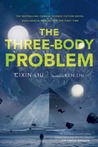 The Three-Body Problem by Liu Cixin
My rating: 2 of 5 stars
Covering decades of Chinese history, this sci-fi novel follows theoretical physicists and other scientists and intellectuals through the Cultural Revolution and Red Guards era to the present day. We are told of a mysterious astronomical facility on a hill and eventually learn it is (or was by the time we learn of it) a SETI facility, one that made contact with an extra-terrestrial civilization. The suspense comes from wondering what comes next.
The history of how intellectuals and scientists were treated in the past and present, told by a Chinese insider/intellectual, was fascinating to me. The story line itself, not so much. Some English speakers may have trouble with the many Chinese names, but there is a list of characters at the beginning to help out with that. The premise is a good one and I enjoyed the first three-quarters of the book, but it went downhill fast at the end. Both the style and the plot stunk, to be frank. The “science” will drive you to eye-rolling or teeth-gnashing at that point. Sure, it’s fiction, but there’s a limit as to how ridiculous it can be even in a novel. There really isn’t even an ending. Now, as I log onto Goodreads, I find that it is the first book in a trilogy. Nothing on the front or back cover or the review I read indicates that (although the inside cover in small print does). If I had known that I wouldn’t have picked it up.
I can give it an “OK” rating for the entertainment value of the first part, but I can’t really recommend it.
My Netflix DVD queue is down to only one DVD. The “Saved” list is about a dozen, but those are not available yet. If you have any suggestions for me, please put them in the reply form below. Here’s a list of what my wife and I have seen recently, so you can skip those. Some we’ve liked, some not, but I’m not going to bother to review them all. Some were pretty bad, actually, so don’t take these all as recommendations. The ones we liked the most were Brooklyn, 10 Cloverfield Lane, and Spotlight. Suggestions for streaming are also welcome, as are movies you saw in theaters that are not yet available on DVD.
The Finest Hours
Doubt
10 Cloverfield Lane
Zootopia
Trumbo
The Sting
Howard’s End
Theeb
Hello, My Name is Doris
Room
Shakespeare in Love
Brooklyn
Creed
Spotlight
This is one of my best in a while:
Koala pole dancer ~ can do a polka, reel
The Anagram Times – Koala Pole Dancer
 A Mother’s Reckoning: Living in the Aftermath of Tragedy by Sue Klebold
My rating: 4 of 5 stars
The author is the mother of Dylan Klebold, one of the two Columbine High School shooters, a description she acknowledges will be the first and defining one she must wear for the rest of her life. The title is quite self-explanatory. It’s the story of what it’s like to live with the guilt, shame, public abuse and recovery from what her son did. Intentionally I have not read other reviews of it but I suspect many will be judgmental, calling the book the author’s attempt to shift blame from herself or simply the apologia of a woman who is blind to her own bad parenting. Others will no doubt be very sympathetic and give stories of suicides or violent crimes in their own families or circles and how they had not seen them coming. I will try to avoid falling into either camp. I do not judge Sue Klebold harshly nor do I exonerate her. I did not know her or her son or anyone else connected with the tragedy. I do know from my FBI years that people can lie and conceal their bad (I’ll refrain from using the term evil) thoughts and deeds from others. I never knew when people were lying to me unless I had independent proof one way or another. Children, especially teens, are extremely successful at concealing from their parents whatever they want to conceal. I also know first-hand what it was like to be a hormone-infused teenager, although I certainly never had thoughts of violence. So I withhold judgment of Sue Klebold as a parent.
This is, after all, a book review, and my goal is to let you know whether it is a book worth reading. For me it was. Most of us are interested or even fascinated by horrendous crimes. We want to know why they happened and how to prevent them. We want to learn something that will allow us to feel that it couldn’t have happened to us. I doubt this book will assuage those fears, but it does give us enough history of Dylan and his family and friends to make our own judgment on that. The first third or perhaps half of the book describes Dylan’s upbringing and family life, his personality, with an emphasis on how normal and happy he was, or at least seemed. While the author can never be objective about this, it isn’t difficult for me to find her descriptions to be credible. As she moves through the telling she is quick to acknowledge that Dylan was not innocent by any stretch of the imagination. She realizes she was in denial about this for a long time after the massacre, wanting to believe he was somehow coerced or brainwashed by Eric Harris, his co-shooter, or was in a drug-induced frenzy, or perhaps didn’t actually kill anyone himself. She was disabused of all these notions when confronted with the evidence by the sheriff’s office. It was interesting to me to learn many of the details I did not know about the crime itself and how the family, the investigators, and the lawyers handled it, how Dylan concealed his intentions from his family and friends. That’s a rather short section in the middle. I hesitate to use the word “entertained” in connection with such a horrific event, but ultimately the book had me engaged intensely through most of it.
Perhaps most interesting to me, and something mentioned almost in passing in the book, is how Dylan had a crush on a girl who was totally unaware of his devotion or obsession or however you wish to characterize it. Apparently he never approached her or told her of his feelings. Personally I think this was a huge factor whether conscious or subconscious in his decision to do what he did. I remember the intense yearning mixed with fear of rejection of those days and how those emotions can override logic. The author puts more stock in the violent video games Dylan played and the bullying he experienced (and which she had no idea of until after the shooting). To Dylan “life was unfair” and it fueled a rage in him that led to the deaths of a dozen and the maiming of dozens more.
The author writes well even if you don’t buy everything she says. The final third of the book is largely about ways to cope and efforts to reduce violence. She has been active in organizations meant to prevent suicide or help survivors deal with it. There is a great deal of material from psychologists or other researchers or professionals and links and citations the interested reader can follow. No doubt there is much that is insightful and worth being aware of, but I also felt there was a lot of psychobabble and buzz words (like “brain illness,” a term the author overuses). The wheat and chaff weren’t easy to tell apart, which makes it all rather useless in my book. Although it may seem cold and heartless to say so, my personal view is that we are like computer chips. This sort of mental aberration is simply defective circuitry. We are all, after all, bags of molecules like rocks, trees, computer chips, and animals. Whether our behavior is governed by Newton’s laws, our DNA, or some circuit designer’s photomask, if there is a defect, the bag of molecules doesn’t work right. Chip makers don’t try to fix bad chips. They produce them by the thousands, test them, and then crush to smithereens the ones that don’t pass. It used to work that way with humans, too. Before effective birth control, many women would bear ten, fifteen, even twenty children if they lived long enough. Two or three babies might die in childbirth or soon thereafter. Another one or two would die of measles, or scarlet fever, or get killed by a kick from a cow. Survival of the fittest wasn’t a theory, it was the way of life. Now we try to keep everyone alive no matter how screwed up and whatever the cost to society. I’m not arguing against that, but I believe in the long run it is an unsustainable model. I don’t believe Dylan Klebold could have been detected as seriously mentally or otherwise defective before the shooting, but many dangerous people can be before the tragic event happens. For them the only real solution is isolation from society whether it be by imprisonment, execution, exile, or any other method that effectively separates them from the mainstream. I think we need to return to the concept of insane asylums. Of course abuses have occurred and will always be possible when we lock people away, but the alternative is an indeterminable number of Columbines. Mass shootings (and bombings and plowing trucks into crowds) are on the increase and they are virtually all done by crazy people. I believe many are preventable.
As a former FBI agent and lawyer I would have liked to have seen more about the crime details, the investigation, and the civil lawsuits. In that I was disappointed. But the book does not misrepresent or sensationalize what it is. It simply tells what it is like to live as the mother of a mass murderer. If that interests you, this is a well-written and frank account of one woman’s experience.
 Defender by Graham McNamee
My rating: 3 of 5 stars
Goodreads 2 stars = “It was ok” which is just how I felt about this one. Tyne (“Tiny”), the main character, is a six foot six inch high school girl living in a low-rent apartment building in a sleazy area of Toronto. She and her skinny little boyfriend Stick find a body in a sealed up shaft in the basement. That’s enough of the plot. The characters were all comic-book implausible one-dimensional caricatures you might see on Saturday morning TV. Tiny is a massive protector, Stick is a computer genius, Vega is the female hood with ‘tude who can hot wire cars. Even the parents are former drug runners or have similar unsavory pasts. It’s hard to believe this author won an Edgar award. He writes like his target audience is eleven years old. The guilty party is so easy to spot I knew “who dunnit” the instant he was introduced. This is a short, quick read but not very satisfying. Goodreads 2 is the same as Amazon 3, so I’ll boost the two stars to three on my blog.
On the news last night I heard both newscasters and interviewees complain about Oakland’s new policy of two-man police cars which will have the effect of reducing the number of cars on patrol. They all said there would be “less police” on the street, or “less patrol cars.” No, there will be fewer cars, not less. As for police, there will be just as many, but they will be in fewer cars. The rule is simple: if what you are talking about is in discrete, countable units, use the word fewer. If it’s not, use the word less. Less police presence is okay because “presence” is not countable. Fewer cars. Less poverty. Fewer poor people. Less suffering. In the opposite direction it’s easier: it’s always “more.” More cars, more poverty, more suffering. Less/fewer parallels the use of “much” and “many”. If you would ask the question “How much” about something, then less is the right word. If you would ask “how many” then use fewer.
It can be tricky for some words like money. Money comes in countable units, but it is the individual units that are countable, not the concept of money in general. You wouldn’t ask “how many money do you have?” So you should say “less money,” not “fewer money” or “fewer monies.” You would say “How many dollar bills do you have?” so it is proper to say “fewer dollar bills.” The units are countable, but the generalization is not.
 Pleasantville by Attica Locke
My rating: 3 of 5 stars
There’s a decent courtroom drama in this book, but it sure takes a while to get to it. Pleasantville is a primarily black neighborhood in Houston. Jay, the lead character, is a successful civil trial lawyer, single parent, and now verging on burnout. A teenage girl goes missing in Pleasantville the day of a mayoral primary race. We soon learn that she was passing out flyers designed to frighten voters away from one candidate and that there were two other girls who went missing in the same general area recently and ended up dead. Eventually, this third girl turns up dead, too.
That’s a good start, but for the next two hundred pages or so we are subjected to a long narrative about the Hathorne family (one mayoral candidate, Axel Hathorne, is the current police chief), background on a huge cast of characters, and voluminous descriptions of what every female character is wearing every time she makes an appearance, how every man holds his cigarette, the political history of the city and community, and the architectural style of every house and the smells coming from every kitchen. I began to wonder if the author was getting paid by the word. There’s no doubt in my mind she was padding a novelette into a full-length novel.
The community of Pleasantville is portrayed in a favorable and believable light. It’s not simply a black ghetto, nor an idealized Father Knows Best middle America with colorless blacks as some clueless whites might envision. The characters, though nearly all black, are diverse – upper, middle, and lower class, ambitious or plodding, devout Christians or not, and so forth. This story is one of those exemplars of political correctness that you feel guilty putting down without finishing it, but I was desperately close to doing so out of boredom when all of sudden, almost exactly two-thirds of the way through, it turned into a cracking good courtroom drama. Neal Hathorne, Axel’s son and campaign manager) is arrested and charged with the most recent murder. The courtroom scenes, especially the witness examination, objections, and judicial rulings were very realistic, much better than the average crime novel. As a lawyer and retired FBI agent, that’s important to me. There’s also some good action in the last third. I won’t say more about the plot so as to avoid spoilers, but rest assured our hero Jay comes through in the end. I would have liked to have rated it higher, but the long slog at the beginning prevents me from doing so.

Matt Wuerker – Politico.com
If the pictures were proportional, the one on the right would actually be even smaller, much smaller.
 Journey to the Center of the Earth by Jules Verne
My rating: 5 of 5 stars
What a treat! I can’t remember when I last enjoyed a book so much. Most readers are at least vaguely familiar with this work, from the movie versions if not from having read it. It is a true action thriller from start to finish, fraught with peril and excitement on almost every page (or CD track in this case). Verne’s fertile imagination is wonderful. The plot is about a scientist and his nephew who find and translate an obscure Icelandic work revealing that its writer had, centuries earlier, traveled to the center of the earth through a volcanic crater. The party seeks to duplicate the voyage. Of course they meet with every possible danger and setback.
The book was written in French in 1864 and translated into English soon thereafter. It thus has certain characteristics that either charm or dissuade the reader. I’m solidly in the former camp. The language is both quaint and highly literate. Illiteracy was the norm at that time, so the mass market then was the top 10% or so of the populace in terms of education. Its aim, then, is quite high. If you are put off by vocabulary like whither and whence or tenebrous, effulgence, pellucid, antediluvian, abnegnation, and verdure, to cite just a few, then this book is not for you. Perhaps reality TV is your best bet. But if you enjoy the English language’s most expressive and evocative aspects used in a natural and compelling narrative, you will enjoy this book as I did. The high literacy level does not come across as stuffy or snobbish. It’s just the way educated people spoke and wrote at that time. I don’t know how much of the style is properly that of Verne’s and how much that of the translator, but the English version delighted me at every turn.
I listened to the audio-CD version. The reader was excellent, portraying the pedantic professor-uncle and the woebegone nephew admirably. He also handled a great many terms in several foreign languages, including Icelandic. Don’t worry, you don’t need to know any of them, as the narrator-nephew doesn’t either and his uncle translates everything to English for him.
We did it! Thanks to you – all of my fans – I have been voted One of the 50 Self-Published Books Worth Reading for 2015/2016 at ReadFreely, placing second overall. Behead Me was the top mystery! Please spread the word.

Buy it at Amazon.com: Behead Me
Some of you Cliff Knowles fans may not know that Cached Out is available as an audiobook from Audible.com. Not only that but it’s available for FREE! Do you have a long commute and need something to play during those endless hours stuck on the freeway? This is almost 15 hours of listening. Here’s a preview:
If you are not already an Audible member, you can click the link above and join Audible, then select Cached Out as your first book. It will be free. If you want to stay an Audible member, then fine, do nothing and you will be charged a monthly fee for subsequent months, but if not, just cancel when prompted after a month and you will be charged nothing.
If you are already an Audible member, you know that you get one free book per month as part of your annual fee. Just select Cached Out as your monthly choice. You pay nothing more than your annual fee.
What if you already bought the book in Kindle form but don’t want to join Audible? For only $3.47 you can get the audio version. Wouldn’t you like to listen to it now? It’s been a while hasn’t it? Remember those heart-stopping chase scenes at the end? Listen to geocacher and professional voice actor Joe Hempel weave the spell.
Members of the American Cryptogram Executive Board (ACA EB) have asked publicly for anyone with dates and knowledge of the ACA’s social media presence to provide them. I have researched this and constructed this timeline. Most of this was found from searching the CD-ROM provided to members, but that only goes to 2009. Citations are provided.
For those not familiar with social media, Facebook and Google+ Communities are both free web-based commercial services, in effect competitors. Both allow posting of graphics, surveys, and other things that are less suitable for email, although it is now possible to put such things in email. Facebook has ads. Google+ or the Google group might also, but I have an ad blocker and do not see ads in either place, so I am not sure. Google+ allows “hangouts” for communities, i.e. live video/audio meetings similar to Skype. The Facebook group, Google group and the Google+ community are closed and thus people must join to post, but people who search for them can find them and request to join. ACA membership is no longer required in the RC. Consult the owners of the other two media for details on those. KEYSTONE reports that the Yahoo group and all its contents, including member files, were taken down by Yahoo, and Yahoo was non-responsive as to why, thus motivating restarting with MSN. The MSN and Multiply groups were disbanded because the host company discontinued all social groups. Much or all of the content of the CDB was moved to the Member’s Area of the ACA website and is still available for download.
 The Man in the Gray Flannel Suit by Sloan Wilson
My rating: 4 of 5 stars
This modern classic (to use an oxymoron) began for me almost as a duty read, like something from a teacher’s summer reading list. However, it didn’t take long for it to become a compelling story that evoked visions of my childhood. It was a view of my parents’ life, though, not my own. It isn’t what I would call a fun read, either, but I still enjoyed it. The characters aren’t particularly likeable and there certainly isn’t what passes for action these days. It describes the life of a midlevel office worker in New York who returned from the war (WWII) and becomes enmeshed in the corporate rat race and suburban status race while his marriage seems to be crumbling.
I more or less knew that much about it, that and the fact it had been a Gregory Peck movie back in the 1950s. I was surprised to learn that it was much more. There is a very credible account of the life of a WWII paratrooper, a torrid love affair, a complex family and legal relationship with a rich relative who dies with a contested will. It’s like a better-written Mad Men without all the sex, smoking, and booze. Well, there’s a bit of all of those without the excesses of the TV screen version. The writing style seems dated, almost quaint now. It’s not elegant prose; it’s more prosaic than that (to use a tautology). The plot moves briskly as we wait for the main character’s life to implode at any moment. It definitely makes one think about what life is all about, how to balance responsibilities toward family and employer and one’s own need for happiness. If you read this you will be undergoing some self-examination, so be prepared. Have a mirror handy.
 Standup Guy by Stuart Woods
My rating: 2 of 5 stars
My high hopes were dashed early on this one. It was billed as a legal thriller, but it was neither thrilling nor did it have anything much to do with a legal case. Still, it wasn’t bad so much as disappointing. The author can write grammatically and fluidly, which puts him ahead of two-thirds of what’s out there. The main character, Stone Barrington, is supposedly a lawyer, but all he ever seems to do is eat at expensive restaurants, talk to the president of the U.S., and sleep with women. What little legal advice he dispenses is horribly bad and inaccurate. For example, his first client comes in with millions in money stolen decades earlier but only now surfacing because the thief (now dead) gave his prison buddy (the client) the location. Barrington tells him that the money is now “legal” since the statute of limitations has run. Totally wrong. First of all, the statute of limitations does not change stolen goods into non-stolen goods; it only affects whether someone can be prosecuted for the theft. The money is still stolen property and can be seized by police and returned to its owner. Secondly, since it’s still stolen property, possessing it is a new crime for which the current possessor can be prosecuted, or possibly even for being an accessory after the fact, both crimes that occur in the present day. Not only that but the original statute of limitations may have been tolled for any of several reasons. Yes, I’m a lawyer and former law enforcement, so garbage like this in a novel gets me. If you’re into legal fantasy and it doesn’t bother you that the whole plot could never be close to true, then never mind my complaints. Legal thrillers should only be written by lawyers, in my opinion, and even then, only by ones who know the field. Even Grisham gets the criminal law stuff completely wrong, although he gets the tort stuff right. Apparently that’s his practice area. Unfortunately, though, being a lawyer does not mean you can write well for the general audience. Scott Turow is the only lawyer/author I know of who can write exciting novels and get the law right.
Once I saw the author fail to get that right I knew the plot was hopeless. The real villain in this one is so obvious it was ridiculous. The way the final crime against Barrington was carried out was ridiculous. The criminals did just about every possible thing they could to get caught, if you could call that ending getting caught. The best part of the book was the thread involving his client, who turned out to be a likeable fellow (the eponymous “standup guy”). That sideline was amusing. The whole thing is fluff, mostly inoffensive (although it did get crude toward the end), but not something I could recommend.

Frank and Ernest image courtesy Universal Uclick
Ahem! The proper term is “fragment sentence”! (But the joke wouldn’t be funny then.)

Pearls Before Swine image courtesy Universal Uclick
