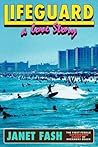
Lifeguard: A love story by Janet Fash

Lifeguard: A Love StoryLifeguard: A Love Story by Janet Fash
My rating: 2 of 5 stars

This book was very disappointing. From the title, cover picture, and brief library description, I had thought this would be about saving lives, love for the ocean, and things of that nature. There was some of that. But about 80% of the books is about the corruption in New York City Lifeguard program and one man in particular. The union boss for the lifeguards, a man named Stein, ran the whole program like a fiefdom, rewarding his friends and cronies with jobs and promotions and taking vengeance on anyone who crossed him. The author, a thorn in his side but somewhat safe from his wrath since she was the city’s first female chief lifeguard, essentially wrote an exposé. I really wasn’t interested in that and I think there was some misrepresentation as to content by the publisher. It was upsetting to see corruption spelled out. In addition, the writing wasn’t very good. It wasn’t terrible, but the author was fast and loose with grammar at times (“Me and Bob went …”) and she confesses to needing a ghostwriter (or cowriter), Clio Chang, for her “writing abilities.” This is disturbing since the author was a teacher during the off season. I hope she didn’t teach English. But worst of all was her casual attitude toward drinking and drug use. She writes about how much fun it was as a teenage lifeguard to get drunk every night and come in to work hungover. She even seemed to look the other way toward cocaine use by other lifeguards like it was just boys being boys. In my view anyone who gets drunk regularly is not qualified to hold any job that involves the responsibility for the lives of others. This behavior seemed to persist even into her adult years. I finally had to start skipping liberally in the last third of the book.

View all my reviews

AI failing – new cars

We recently sold my wife’s 20-year-old car (2006 Acura TSX) as it was unreliable and we’re shopping for a new EV. I asked four AI sites for recommendations: Claude, Gemini, Perplexity, and Copilot. I gave them all the same criteria: not too huge (small garage, wife’s preference, no need), low tech – more buttons and knobs, fewer screen icons/menus, plug-in EV. After some back and forth and sharing the recommendations of each site with the other sites I winnowed it down to three choices they were all more or less happy with: Ioniq 5, Kona electric, and Polestar 2.

So today we visited the local Hyundai dealer, which sells both the Ioniq and the Kona. It turns out the Kona EV is not available in the U.S., at least not new, due to tariffs. The Ioniq 5 was there and it wasn’t a wasted trip, but still, I had specifically asked the saleslady yesterday if they had the Kona EV and they said yes. They lie to get you in the door. She wasn’t even there today even though she told me to ask for her. Maybe AI learned to lie from humans.

So I asked Google (AI mode) for the nearest Polestar dealer and it gave me the info for Volvo Palo Alto. I had seen a Polestar dealership there in the past. I called there to confirm they had the Polestar 2 in stock. The answer is no. They only service Polestar; they aren’t a dealer and in fact, there are no longer any U.S. Polestar dealers because of the tariffs. They all closed. Polestar has left the US market permanently after 2026. They did have a low-mileage used Polestar 2 and the sales guy sent me a video. It actually looks darn good for what my wife wants and needs, but I’d be nervous, as she is, about a used car that doesn’t have a dealership nearby. How long will the Volvo guys have any knowledge or interest in maintaining it?

So I went back to all the AI sites and pointed out that two of the cars they recommend are no longer available in the U.S. They all “apologized” but I don’t blame them despite the fact that I had said we were shopping for a new EV. I hadn’t specified that we wanted something to buy right now in the U.S. They were giving feedback based only on the criteria I gave it and online reviews, dealers’ specs, etc. So now I have a new set of cars to research, but I’m going to resort to an old-fashioned technique and ask my friendship circle for recommendations. You have the criteria above, and in addition I’ll mention that my wife is (somewhat reluctantly) driving/sharing my 2021 Volvo XC40 EV (which I love) and we have a level 2 charging station in our garage. An EV is an absolute. My wife and I hate gas stations and oil changes, etc.

Let me have your recommendations!

We Were the Lucky Ones by Georgia Hunter

We Were the Lucky OnesWe Were the Lucky Ones by Georgia Hunter
My rating: 4 of 5 stars

This is a semi-biographical novel of a Jewish family in Poland during World War II. The hardships and cruelty they endured are incredible, yet real. It is a large family, and as the title implies, they are the survivors, the lucky ones. Most of their fellow Polish Jews did not. Some were living in eastern Poland when Hitler and Stalin divided the country. They ended up in Soviet labor camps, not much better than Hitler’s camps. Others ended up in the walled-in ghettos the Germans created. One brother, Addy (we later learn short for Adolf) is in Paris at the outbreak of war and is inducted into the French army. Others at various times end up in Italy or Persia or Brazil.

The book is well-written although I thought it was going to be a slog at first. It was a book club choice, so obligatory, but it didn’t take long for me to become engrossed in the story. I’d give it a higher rating if it weren’t for the depressing nature of the story itself. It is unpleasant to yet again read of the atrocities the Germans (and the Russians and Christian Poles, too) committed against the Jews, against anyone. I couldn’t take more than an hour or so of reading when I had to switch to something else.

View all my reviews

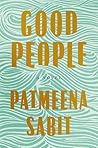
Good People by Patmeena Sabit

Good PeopleGood People by Patmeena Sabit
My rating: 4 of 5 stars

The central figures in this novel are the Sharafs, an Afghan immigrant family. There is a death, but we don’t know at first who died or whether it was an accident or a murder. Although fiction, the author says it was inspired by a real case. The story is told in a piecemeal way modeled after a typical crime documentary where snippets of many interviews are interleaved to tell the story in chronological order, but from multiple different views and experiences. The Afghans surrounding the main characters look at all the facts from the standpoint of their traditional culture and the Islam religion, while neighbors, teachers, reporters, police, and other non-Afghans see things a different, traditional American way. Interestingly, the author does not tell what happened by any purported statement of the main characters, only surrounding characters, friends, witnesses, reporters, etc., except for an attorney representing the accused at the end. Thus there is a lot of rumor and speculation with people accusing and others defending. Some Afghans say the family was too American while others say the family hadn’t assimilated and were actually anti-American and too Afghan. It does a good job of portraying racism, culture clash, and generation clash.

Some people may be put off by the unusual format, with some “chapters” being only one sentence, and even the longer ones usually only three or four pages. It also suffers a little from hyperbole and repetition. The purported newspaper coverage is completely tabloidy, hearsay, and gossip, not credible reporting. We get four, five or more people making accusations or providing evidence or theories that suggest someone is guilty, followed by the same number of others explaining away that so-called evidence and coming to their defense. You only need one or two of each, not five. In short the book is somewhat overdone and overlong, but still a worthwhile read.

View all my reviews

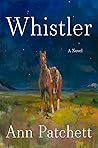
Whistler by Ann Patchett

WhistlerWhistler by Ann Patchett
My rating: 5 of 5 stars

Like Patchett’s earlier book The Dutch House this book is beautifully written without a heavy reliance on plot. It is about relationships, about the choices we make in whom we love and mistakes we make and the consequences that has on our happiness. The characters are nearly all likeable though each is quite different from the others. There is a suspense generated that holds throughout the book. It surrounds how the narrator, Daphne, survived a life-threatening situation (a car wreck, but it’s more than that) in her childhood and why she thought it was her fault her parents divorced. Daphne and her family are basically book people (readers/editor/publicist) in Boston and New York at different times, and that explains how some came into contact with others, it doesn’t play a big role in the story. It’s more of a story about love – between spouses, sure, but also between parent and child, both “natural” and step. Patchett has great insight into human behavior.

View all my reviews

It’s Not Her by Mary Kubica

It's Not HerIt’s Not Her by Mary Kubica
My rating: 3 of 5 stars

This book is hard to rate. I enjoyed it even though I thought it was a piece of schlock tripe. It could be a 1 star or 5 star. Two related families are at a summer camp. Two people get killed and their teen daughter is missing. The author tells the story from two time frames – post-murder is told by Courtney, the sister of one of the murder victims, and pre-murder by Reese, the daughter of the victims and Courtney’s niece. Reese is a hormone-deranged teenager: surly, spiteful, rude, that is, until she sees the hot pool boy Daniel and Daniel takes an interest in her. Then it’s the best vacation ever. Courtney is a suspicious, paranoid airhead. She suspects everybody including her own husband, her nephew Wyatt, and of course Daniel. Then there’s the camp owner lady Mrs. Dahl who seems oddly detached from this horrible double murder. To top off the character list, there’s Mae and Cass, 10-year-old cousins, the youngest of the two families, and Detective Evans who seems competent and empathetic. The book kept me guessing and relatively entertained for several days, more so than the nonfiction book I left on the shelf.

So why do I complain that it’s schlock tripe? The author employs transparent cheap tricks to create a false sense of suspense and mystery. A woman hears a scream. The chapter ends and the scene switches. We have to wait for find out what the scream is for and it turns out to be something harmless and meaningless in the plot. Blood is found unexpectedly. The chapter ends so we have to wait for the explanation. Reese sneaks out at night to see Daniel and before she gets to the meeting spot she sees a form in the forest following her. The chapter ends and we have to wait. Courtney and Reese “feel” something is wrong, something ominous is looming but it’s nothing. You get the idea. I’ve never had to roll my eyes so much in my life. It’s impossible to figure out who the murderer is until the end because the motivation and unlikely mechanism that set the murder in motion isn’t revealed until then. The writing isn’t elegant or insightful; it’s a pure beach read aimed at the semi-literate. I feel guilty for reading to the end. Maybe that says more about me than the book.

View all my reviews

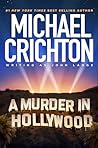
A Murder in Hollywood by Michael Crichton

A Murder in HollywoodA Murder in Hollywood by Michael Crichton writing as John Lange
My rating: 5 of 5 stars

I’m a big Crichton fan and it was no surprise to me that I loved this book. The primary appeal was actually not the mystery, although that was good, but all the inside detail about the movie business and the shooting on location in particular. The title is an odd choice since all the action takes place near Tucson, Arizona where a western is being filmed. The writer is found dead. He was a nasty fellow and quite a few people have motive to kill him, but was it murder or an accident? The local authorities have tentatively ruled it an accident.

The studio head brings in Perkins, the top insurance investigator to serve as private eye. He finds a lot of things to be suspicious. The detective work is superb (Sherlock Holmes-like). The biggest flaw in the book for me is that it is too short and too fast a read.The author originally wrote this under the name of John Lange, a name he used before using his real name and publishing The Andromeda Strain. This confused me at first because this book supposedly was never published in those early days, only in 2026. But Wikipedia tells me this was written in 1973, four years after The Andromeda Strain and two years after that was filmed, so I presume he got his scoop from being involved in that filming. I don’t know why he was still writing under the name Lange by that point.

View all my reviews

The Oligarch’s Daughter by Joseph Finder

The Oligarch's DaughterThe Oligarch’s Daughter by Joseph Finder
My rating: 3 of 5 stars

Our hero Paul falls in love with Tatiana, the daughter of a Russian oligarch living in the U.S. Hmm, maybe that where the title came from. The writing jumps back and forth in time starting from the early days when Paul falls for her and then to present day where he is hiding in a small town under a different name building boats. He has a girlfriend there and it’s not Tatiana. He’s obviously on the run from someone, but who, and why? The story continues to ping pong back and forth in time. There are several suspense/action scenes as Paul is pursued and has to use his wits and some luck to survive. It’s reasonably entertaining until it gets near the end and the plot begins to have some big “twists.” At least the author and publisher may consider them twists. They’re called twists because they’re unexpected, but they’re actually unexpected because they’re preposterous eye-rolling fantasy. I lost interest after the big bloodbath scene (not a spoiler). As a retired FBI agent I’m picky, maybe too picky, about portrayals of the FBI in derogatory ways, but mainly totally impossible ways. The author seems to get all his information on the FBI from second-rate TV shows. If nothing else, it spreads misinformation about the FBI. I finished it because it’s a selection for my book club.

View all my reviews

Upgrade by Blake Crouch

UpgradeUpgrade by Blake Crouch
My rating: 2 of 5 stars

I’ve read two previous Blake Crouch books, so I should have known better than to read this one. He has intriguing ideas for a sci-fi fan and I get hooked on that, but the execution is poor. Here the main character is the son of an infamously brilliant but misguided genetic expert who tried to save the world from ecological disaster by engineering some genes affecting crop species, but that went haywire and she ended up killing millions of people due to unanticipated side effects. To carry on her work, she injects her two children without their consent or knowledge, giving them both genetic “upgrades” turning them into a modern-day Superman/woman pair. They become enemies and you have a pretty classic superhero vs. supervillain story. The writing is second-rate with various minor sloppinesses like saying his pulse shot to 114 bmp (bitmap?), but the worst aspect is how it is overladen with technobabble. The author obviously spent many hours on Wikipedia, Google, or his favorite AI chabot to get lists of gene names and acronyms, weapon brands and specifications, obscure species scientific names and capabilities, and other mumbo-jumbo to impress those who lap that stuff up. The plot is preposterous and the battle of the titans at the end is laughable. Still, I read it all the way through and it kept me occupied, if not entertained, so I can’t give it a 1.

View all my reviews

Polar Star by Martin Cruz Smith

Polar Star (Arkady Renko, #2)Polar Star by Martin Cruz Smith
My rating: 3 of 5 stars

The disgraced investigator Arkady Renko (Gorky Park) has fled Moscow and found work on the Polar Star, a Soviet factory ship in the Gorbachev era. The US and USSR work jointly with American ships trawling the Bering Sea and the Soviet ship processing the catch. Then a woman’s body is hauled up in one of the nets along with tons of fish. It turns out to be one of the kitchen workers on the Star, a vamp who has been sleeping with several men. Why was she in the water and how did she die? It’s murder we find out, but then we have the questions of who, how, and why.

The author has penned another uplifting novel of the Soviet state. I say uplifting not because that is the tone of the story but because it is the exact opposite. The author has again captured the miasma of Soviet despair, cynicism, corruption, depression, greed and desperation that makes the American reader like me feel so lucky to have lived here and not there through that era. While the tone is mesmerizing at times, the plot becomes too hard to follow. There are too many characters, both Russian and American. The action scenes are well done, but too numerous and implausible. I was satisfied enough as I became immersed in the story, but in the end I can only give it a mediocre rating.

View all my reviews

Breakneck by Dan Wang

Breakneck: China's Quest to Engineer the FutureBreakneck: China’s Quest to Engineer the Future by Dan Wang
My rating: 4 of 5 stars

This scholarly work is both a historical review (up to the present) and an opinion piece comparing and contrasting the PRC and US, primarily from an engineering, business, and economic perspective. Wang is a Canadian of Chinese origin and has lived and worked in Canada, China, and the United States, so he writes from personal experience. As a lawyer I largely agree with the author’s characterization of the U.S. as burdened by process, which is a small issue in the autocratic Chinese regime. His observations, while on point, at times overlook important societal factors. The takings clause of the U.S. Constitution (Fifth Amendment), for example: “…nor shall private property be taken for public use, without just compensation.” I skipped a little toward the end and may have missed something, but I don’t believe this was ever mentioned in the book. It is fundamental to his premise. America, and especially Americans, take personal rights seriously. I worked for a public agency in San Jose in the field of eminent domain takings of private property for transit purposes. The laws protecting owners and lessees are not only seriously unbalanced to the detriment of the government, but the process is even more onerous, i.e., expensive, than Wang describes. It’s amazing that any new infrastructure gets built anywhere in the U.S., especially in the Bay Area or other astronomically expensive areas.

He ridicules the transit failures of the Bay Area. While he’s not wrong, he fails to note the striking differences in the Bay Area from other big cities in the US or even China: a huge metro area with no central business district, only three major population centers distanced about 50 miles from each other with an enormous body of deep water in between. The high water table and active earthquake faults make subways nearly impossible in the South Bay, the heart of Silicon Valley. The high-speed rail project of the Central Valley is burdened by the same geographic and constitutional obstacles. In a way, the U.S. and especially California is a victim of its own success. It is so desirable to live here, for many reasons, that the land is very expensive which in turn, combined with the takings clause, make such projects nearly unobtainable. Wang himself admits that despite the impressive infrastructure achievements China has made, many Chinese, including he and his parents, have chosen the land of personal rights and crumbling bridges right here in North America to live. Some things are just not reconcilable. We all have to prioritize.

View all my reviews

Mating by Norman Rush

MatingMating by Norman Rush
My rating: 1 of 5 stars

The description of this book in Goodreads says it is a “splendidly expansive novel of high intellect….” The New York Times Book Review quoted on the cover says it is “Exhilarating … vigorous and luminous … evokes(s) so eloquently….” Baloney! This book is so overwritten and pretentious I thought it was a satire when I started reading it. The author never uses a two- or three-syllable word if he can find a four- or five-syllable one. Never an English one if there is a French one twice as long. Consider this passage where the female narrator is describing an older man, “He was still well-built but showing a little gynecomastia, which didn’t really go with his rectilinear, almost columnar midsection… (he) was just over the line into paterfamilias.”

I once had an English professor who liked that kind of writing. I was getting C’s on my essays until she read aloud another student’s she considered an A paper. Once I choked down my vomit reaction I copied that style for my remaining papers and got an A for the class, but I could hardly live with myself. I couldn’t stomach any more of this book and stopped about page 40. If you enjoy this sort of thing, I pity you.

View all my reviews

More fun with SUNO

I’m continuing to enjoy my membership in SUNO.AI, the artificial intelligence music company. I’ve created over 70 songs so far. I’ll embed a couple of my recent ones just for something different from all the book reviews.

Fever Beach by Carl Hiaasen

Fever BeachFever Beach by Carl Hiaasen
My rating: 2 of 5 stars

This book is vintage Carl Hiaasen, which is to say, it is excessively crude, insulting, and generally offensive while also being witty and amusing political commentary. Here a bunch of right-wing white supremacist losers, mostly rejects from the Proud Boys and Oathkeepers, form a group called the Strokers for Liberty. Thin as it is, the plot revolves around the Strokers being funded by some rich white supremacists through their local bribed congressman to influence the upcoming election and, more importantly to the funders, create a fake charity along the lines of Habits for Humanity that is actually a plot to get a patch of land cleared and approved for development. Needless to say if you are familiar with Hiaasen, the book is a sort of stream of consciousness tale of crazy bungled idiocies. The Strokers get their tails whipped by a bunch of drag queens. Their leader, Dale Figgo, was at the January 6 insurrection but mistakenly smeared feces on the statue of a confederate general thinking it was a U.S. President. Figgo and his crew are mostly derailed by a rather unambitious trust fund baby named Twilly and his girlfriend Viva, who also happens to be Figgo’s tenant, both of whom are appalled at the politics and stupidity of the Strokers. Hiaasen can be funny at times, but I am so put off by his crudity and lack of any credible plot that I can’t give this a high rating. I only read it because it’s a choice of my book club.

View all my reviews

Library enshittification

I love my local library and feel privileged to have such access to books, music, and movies there, but sometimes I have to roll my eyes. The parking lot at this branch is small and one lane, with slant-in slots on one side for the first half and on both sides in the second half. Of course since it’s one lane, there’s just one entrance and one exit at opposite ends similar to a drive-through. As I pulled into the parking lot today I noticed all the first half slots were filled, so I continued on, but then saw a car slowly coming at me the wrong direction. I slowly pulled forward hoping the driver would realize the error as I got closer. Then I realized she was trying to back into a slot. That makes no sense in this lot since that would only cause her to be facing the wrong way when leaving. All the slots are slanted the same way, unlike some lots where they go both directions and the lanes are wide enough for two-way traffic. She’d have to make a sharp 120° left turn to exit the right way, so it’s triple the work parking and again leaving. I watched as she pulled in, which took twice as long as it should, and then passed her to park in one of the last slots. As I got out I realized she had parked so crookedly she’d taken up three slots!

After that great start I went in to get my book, which was on hold. I checked it out, no problem. I’d noticed that my wife also had a book, as I always check for her and vice versa; so I checked hers out with the copy of her card I carry. At the end of the usual process, instead of a message saying the book has been checked out, a big red warning screen popped up saying the item “could not be added to your account” and to see the librarian. So I went to the desk and stood there watching as both librarians ignored me and kept talking to each other about something. Finally one of them came up to the counter and offered to help. I explained what happened and she took my wife’s card and scanned it. She said the problem was that my wife had left her library card in the reader and needed to come to the desk herself to retrieve it. My wife had in fact left her card there accidentally a few days ago, but she had already gone back and retrieved it. This flummoxed the librarian because the computer told her no that hadn’t happened. She almost argued with me but rummaged around in the drawer where the found items are kept and couldn’t find it; so then she decided the computer must be wrong, and proceeded to clear that blockage. She told me it was handled and I could leave. I asked her if the book had completed checkout and she said yes. So I left.

But wait! There’s more. When I walked out, the electronic sensor set off the alarm beep, so I went back in. The librarian was reflummoxed and checked again to see that the book had been checked out okay. Then she realized that it wasn’t my wife’s book that set off the alarm, but mine. She checked that and it showed as checked out to me. She said the machine is supposed clear the electronic thingy in the book when I check it out, but apparently hadn’t, due to the book’s thickness, so she took my book and rubbed it around a few times on her own electronic pad. She handed it back and told me not to worry about it and to just keep on going if it happens again. So I went to leave again, but there was a lady coming in and another going out at the same time. I tailed right behind the lady exiting just as the other lady tried to enter. The alarm bells and beeps went louder and longer this time. The lady I tailed yelped and went back to the librarian thinking she had set it off. I got out of there while the getting was good as the other lady stared at me, no doubt sure I had just stolen a book and was escaping. As I approached my car, I saw that the badly parked car was gone and all three slots were now filled with cars parked correctly. Sigh.

W3W on the News – leaking chemical tank

For those of you not following chemical news, there is a company in Garden Grove, California (near Los Angeles) called GKN Aerospace that has a dangerous chemical situation. A huge tank of methyl methacrylate, a “highly volatile” substance used in the production of plastics started overheating and was in danger of exploding. The fire department has been spraying it down. It has now sprung a leak, which is considered a good thing as the pressure has been reduced and the heat is starting to lessen. So of course I felt I had to check this out with my trusty reporter, What3Words.

The tank is nestled against two other tanks. The W3W coordinates for this cluster are:
umbrella.crispy.island
heavy.longer.mushroom
payback.shared.erupted
sulked.reveal.dent

So reading those tea leaves, what we have is a vessel with a dent that when it has erupted will turn the area into a crispy island under a mushroom cloud. How fun.

Bright Young Women by Jessica Knoll

Bright Young WomenBright Young Women by Jessica Knoll
My rating: 3 of 5 stars

This story is told by two young women, Pamela and Ruth. Pamela is a sorority president in Florida when she witnesses a man enter the sorority house late at night. Shortly thereafter she discovers that several of the women have been attacked and one raped and murdered. Ruth is a young woman in Washington State. It is revealed that Ruth was murdered by the same man who entered the sorority and killed there. The book is a novel with fictional characters, but it models closely on the case of Ted Bundy, the real-life serial killer. I didn’t know that when I started reading and I think I would have enjoyed it more if I had, although the back cover advertises that fact. Though it’s well-written and the author manages to inject some suspense, it is too close to the real mundane world of law enforcement and criminal courts to be exciting. I know that world all too well.

The author also spends too much time depicting all the men as sexist and condescending, including even the judge in the case when the defendant goes to trial. I’m not disputing the accuracy of the depiction, but this is a novel, not a screed, and it needs more plot and less polemics. I listened to the audiobook, which is read by two different women. They both did a good job although one them can’t pronounce erudite or nomenclature.

View all my reviews

London Falling by Patrick Radden Keefe

London Falling: A Mysterious Death in a Gilded City and a Family's Search for TruthLondon Falling: A Mysterious Death in a Gilded City and a Family’s Search for Truth by Patrick Radden Keefe
My rating: 4 of 5 stars

This is a true crime story with a twist. It begins by telling us the victim in this, a 19-year-old boy named Zac, was seen on video jumping to his death from a high balcony in the heart of London. The police quickly chalk it up as another teen suicide. But we soon learn there’s a lot more to it than that. He had injuries not consistent with the fall. We learn the apartment he jumped from was that of a known underworld gangster and enforcer named Indian Dave. Then we learn the boy was living a double life, pretending to be the orphaned son of a Russian oligarch. Another dodgy character named Akbar sent Zac to Dave and both appeared to be “mentoring” him. The police do bafflingly little to get to the bottom of this death. Akbar and Dave both lie shamelessly about what happened that night, as proven by records like security videos, text messages, and phone records. Zac’s parents have to hire a private investigator and an attorney to get any answers. In the end I think they got the full story, but nothing is 100% clear in this one. The story unfolds in a surprising and suspenseful way. Each new chapter brings in a new character, a contradictory fact, and so on. It had me on the edge of my seat throughout. It can be a sad and depressing story, but a worthwhile read.

View all my reviews

Revenge for the Sixties by Peter S. Canellos

Revenge for the Sixties: Sam Alito and the Triumph of the Conservative Legal MovementRevenge for the Sixties: Sam Alito and the Triumph of the Conservative Legal Movement by Peter S. Canellos
My rating: 4 of 5 stars

Sam Alito is Associate Justice of the United States Supreme Court Samuel Alito. The author does a good job of describing Alito’s family and upbringing is reasonably short, efficient ways without this turning into a real biography. This book focuses heavily on how Alito came to wend his way onto the Supreme Court and how he has chosen to wield his power there to complete the rightward tilt of that body. Alito is no doubt a man of high intellect and steely determination. He was almost a cipher throughout his days as a law student, attorney and Circuit Court judge, although those close to him, or who studied him as The Federalist Society did, knew of his strong conservative views. Now the world knows him as an arch conservative who flips his judicial philosophy repeatedly to favor the Republican party. The quotations from his various judicial opinions bring this out in stark relief.

The title refers mostly to Alito’s time at Princeton for his undergraduate days. I had forgotten about that turbulent time. As I was on the west coast at the hotbed of dissent and anti-war picketing (Berkeley) at that time, I didn’t pay much attention to the fact that the same thing was happening at Princeton, the Berkeley of the East. Alito was very must offended by the disruption to his academic career the protests caused and the anti-government views of the protesters. He joined ROTC, one of the targets of the protests. According to the book, this whole experience colored his judicial and even life view. He’s punishing everyone now for the effrontery of the demonstrators et al. As an attorney and someone who turned down the Ivy League to stay at Berkeley, I may have a particular interest in this book that others might not share, but I found it very worthwhile.

View all my reviews

The EXvangelicals by Sarah McCammon

The Exvangelicals: Loving, Living, and Leaving the White Evangelical ChurchThe Exvangelicals: Loving, Living, and Leaving the White Evangelical Church by Sarah McCammon
My rating: 4 of 5 stars

The author read this audiobook herself and did a good job. It recounts her own history being raised by parents in the white evangelical Christian church. Her childhood sounds like an absolute nightmare, one of constant fear: fear of doing something, saying something, looking some way, even thinking about something that somehow will cause her to prevent her from going to heaven, or maybe sending someone else to hell or cause some other form of torment. She later, as an adult, left the evangelical church, hence the title of the book, but the teachings she had have clearly caused her lifelong pain and stress, not to mention loss of normal family relationships. Yet she hasn’t left Christianity. In this respect it resembles another book I read a few years ago: Educated a book written by a woman raised in a fundamentalist Mormon family.

This book, though, is more than that. The author is an NPR reporter and the book is to a large extant an investigative report. She has interviewed many other exvangelicals and religious scholars and reported on their experiences and opinions. The overall message of the book is an important one – that the evangelical doctrine is harmful and now even more dangerous due its linking itself to the far right white nationalist movement, especially to Donald Trump. This message seems to be universal from everyone who left the evangelical movement and from outsiders who have studied it or otherwise experienced it firsthand through family, etc.

While I applaud the the message and the generally excellent writing, I find the style of writing a bit preachy (note of irony there) and a bit too “woke” sounding, which can be offputting. She uses words or terms that one hears all the time on NPR but almost nowhere else and seems unaware that it sounds that way. One such example is saying LGBTQ every single time instead of gay or bi. Five syllables instead of one. It sounds ridiculous when spoken, and (gasp!) she leaves off the +! Heaven forbid (pun intended) that she should leave off some self-identified sexual minority even once. The book also becomes quite repetitive because the stories of her interviewees or sources are so similar. Still, it’s an important book for its content and I found it fascinating while at the same time horrifyingly sad.

View all my reviews